|
In the initial days of railroading, the first freight car was the
flat car. It was nothing more than a platform with wheels and
was used to move anything and everything. Flat cars today are
much more sophisticated and come in an amazing variety of shapes and
purposes. They include drop center, centerbeams, bulkheads and
intermodal flatcars such as spine and well cars. Early in the
1950s, piggybacking (truck trailers on flat cars) got its start and
today is a major player in railroad freight. To reduce the overall
weight pulled by locomotives, minimal spine cars (simply a steal beam
on wheels) were built to carry several truck trailers. Well cars
carry a double height stack of containers (basically trailers without
wheels) by dropping a container down into a welled flat car.
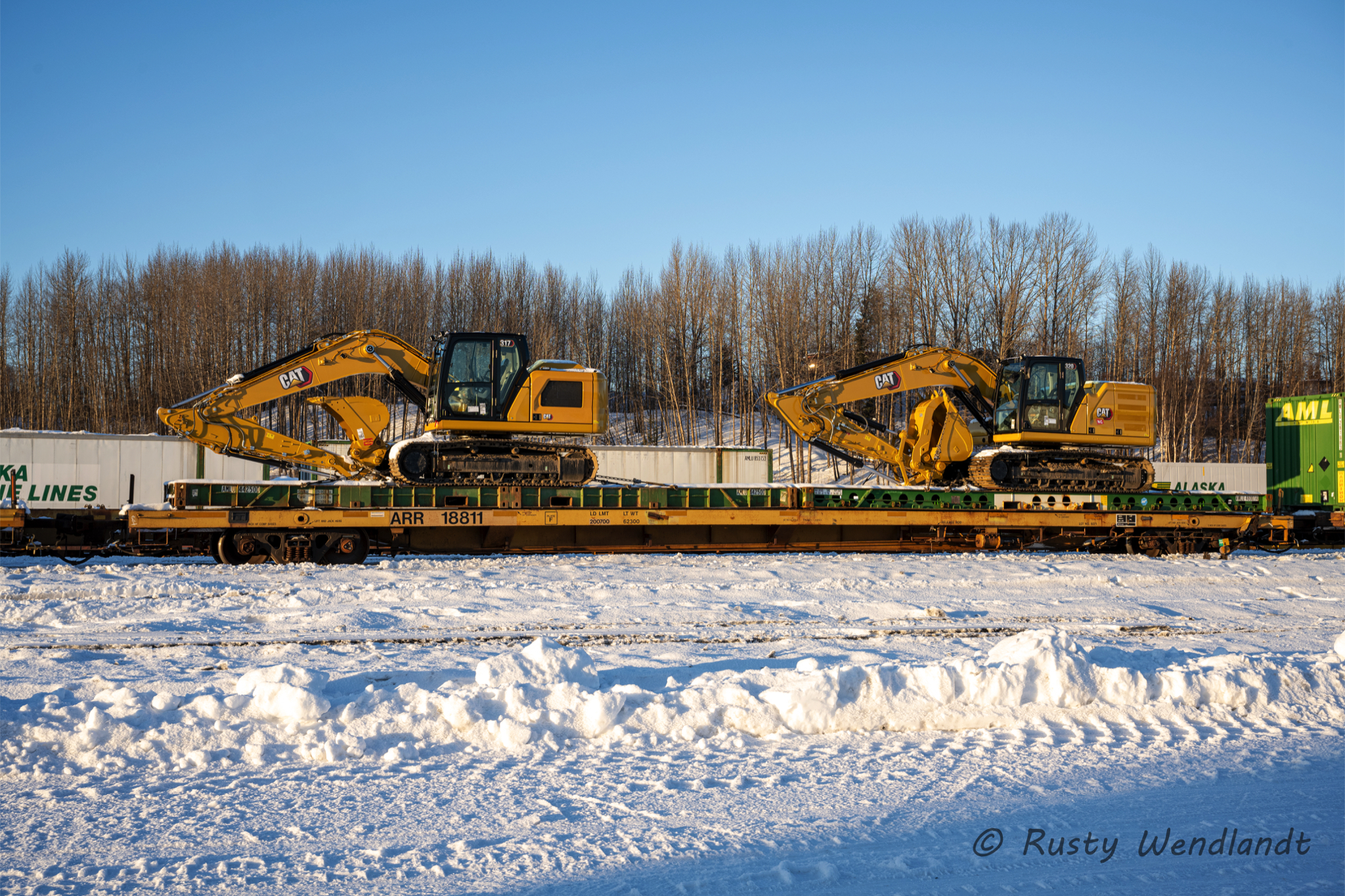
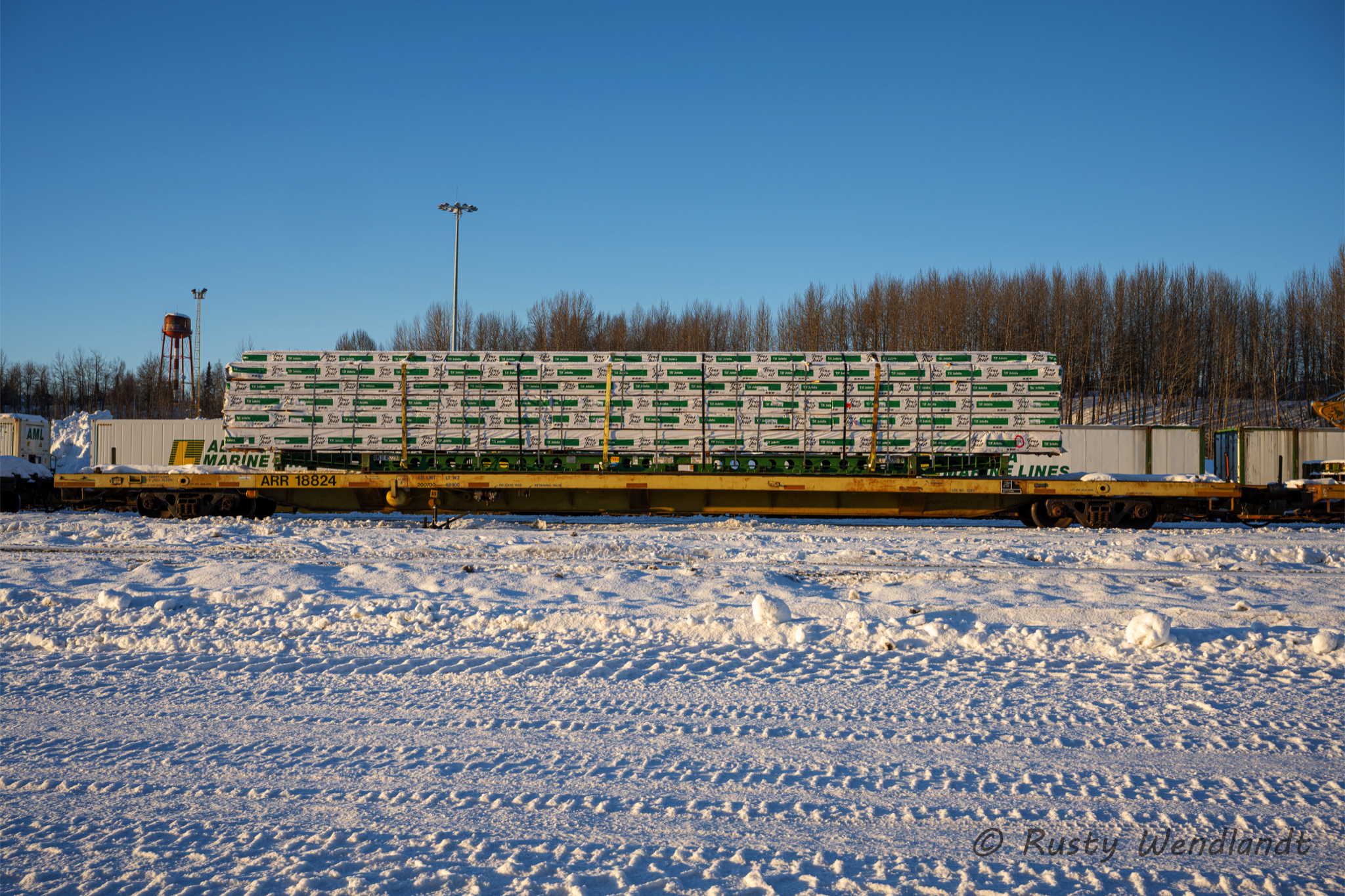
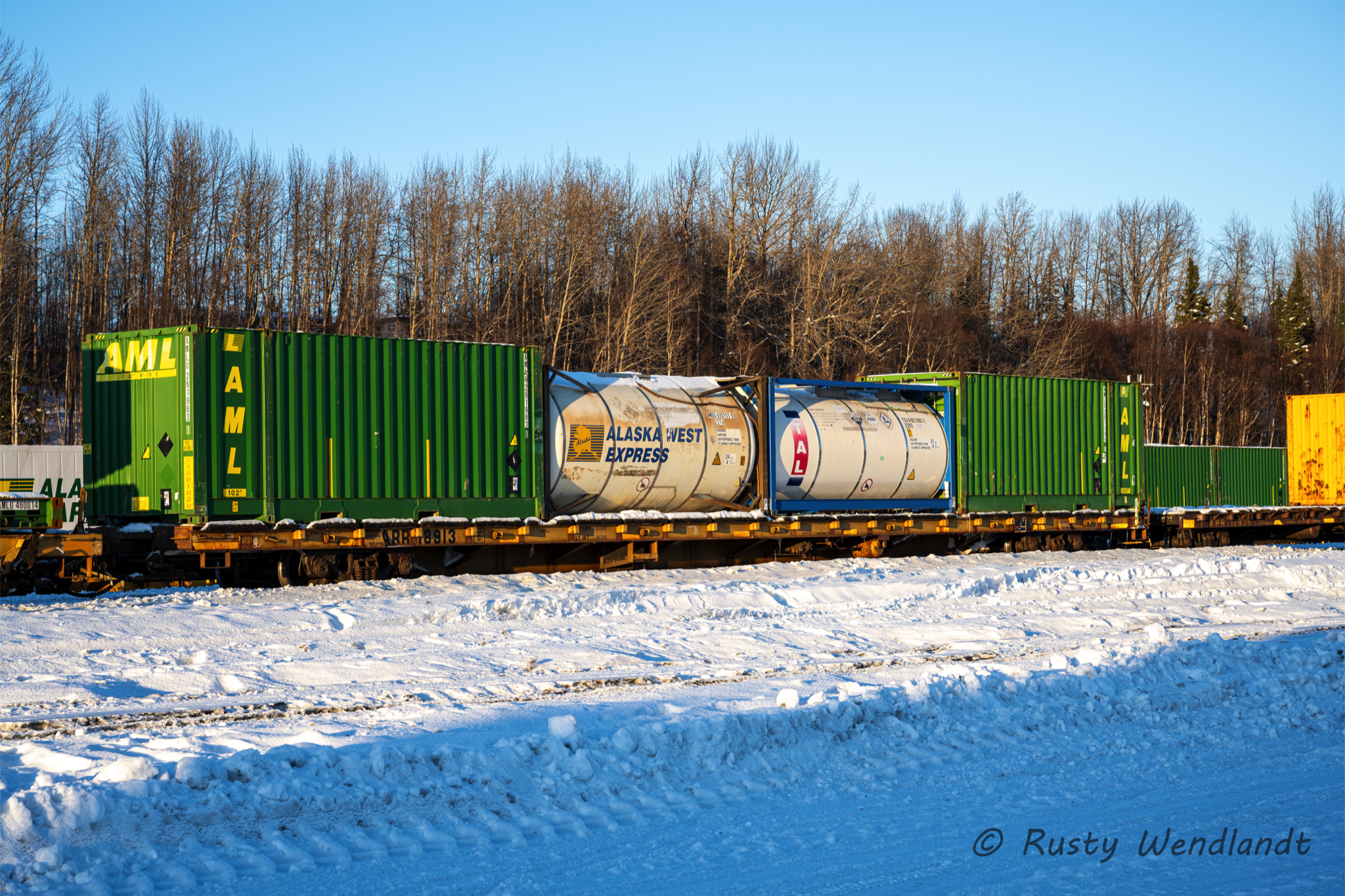
The Alaska Railroad uses various types of flat cars for hauling products
as well as for Maintenance of Way (MOW) service. Shown are several
of the basic types. Click here for roster
information.
Also, check out the information on centerbeam,
articulated and shuttle
flatcars
|
Click on the
pictures below for a larger view. |
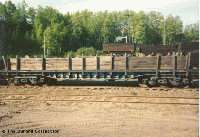 |
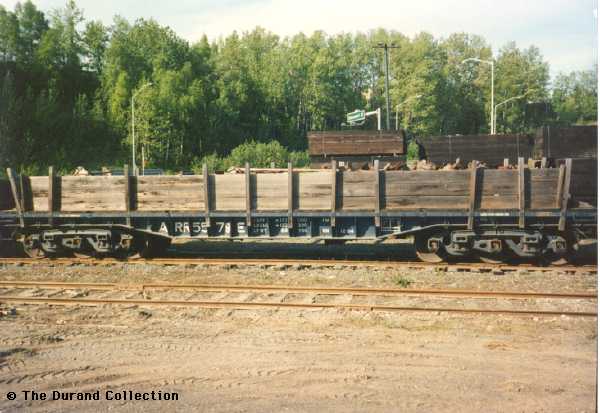
This HD flat is used by the ARR for heavy
lifts when a depressed center is not required. Most often
these cars are seen with a load of tie plates, spikes, or joiners. |
|
|
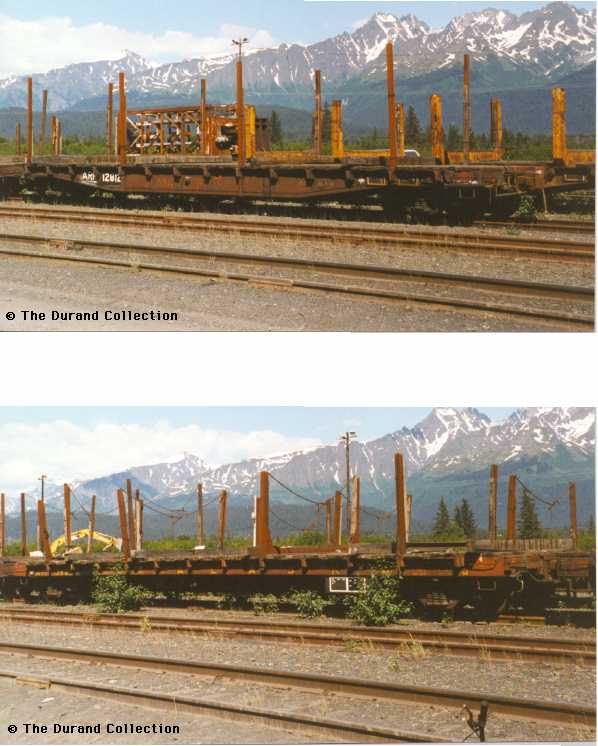
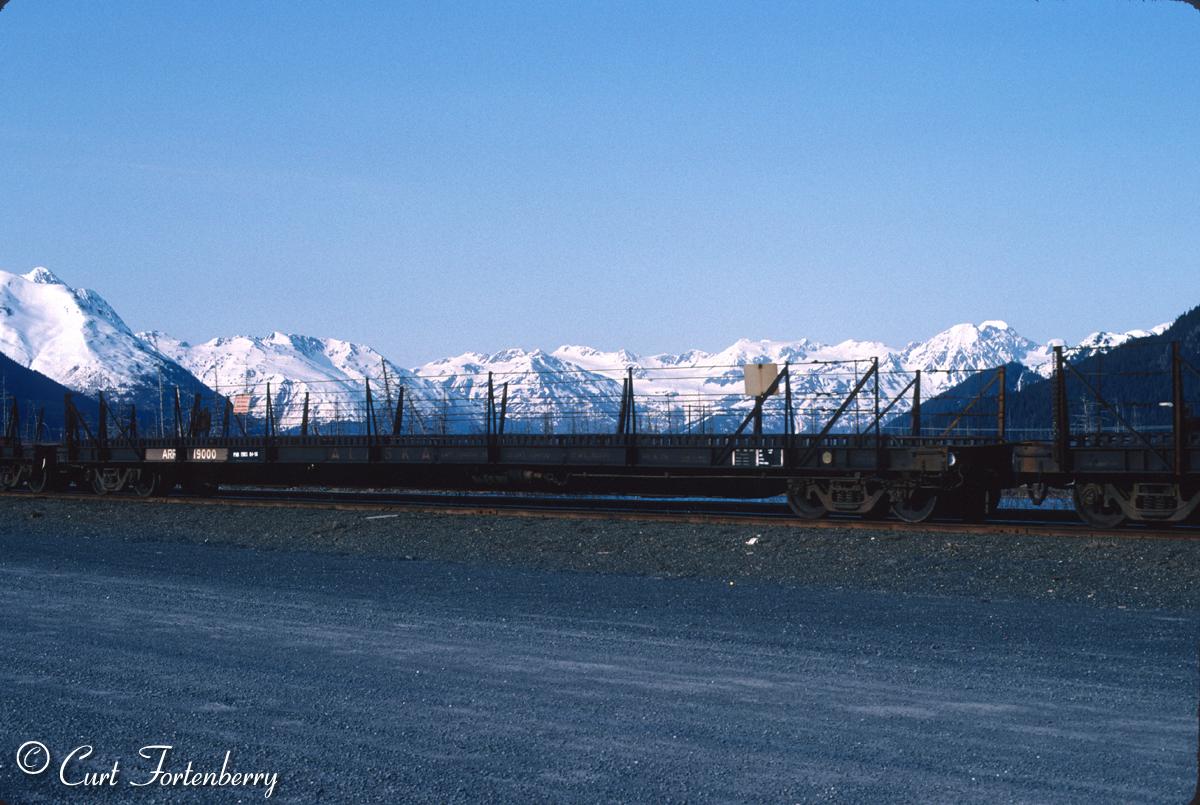
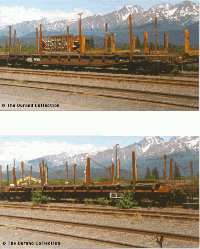
| These are examples of the ARR log flats.
Flats from three different builders are used for this service.
These cars are used for hauling logs between Nenana and Seward and
also for pipe between Seward and Whittier and Fairbanks. The pipe
comes in on a ship to Whittier or Seward and goes to oil companies
in Fairbanks who then truck it to the north slope. |
 |
|
|
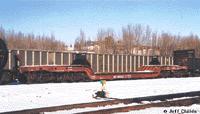 |
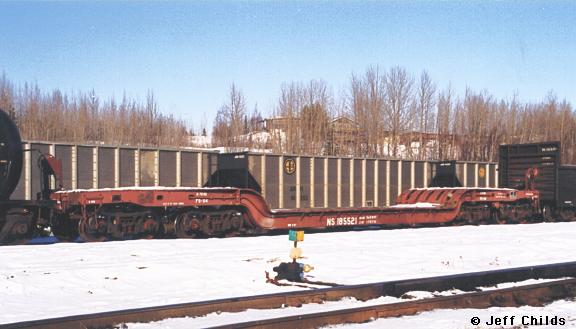
This is a depressed flat car. No, it is
just as happy as the rest of the freight cars. It is called depressed
because it has a drop center. Flats like this are used to transport
bulldozers and similar equipment. Since no loading ramp is required,
the railroad can stop any place up and down the line and load/offload
equipment. This permits express delivery of the equipment to slides
and/or derailments to get the line open quickly. 3/99 |
|
|
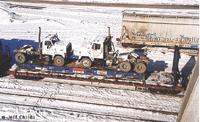
| This is a double piggie, trucks on top of
a flat on top of a flat car. |
 |
|
|
|
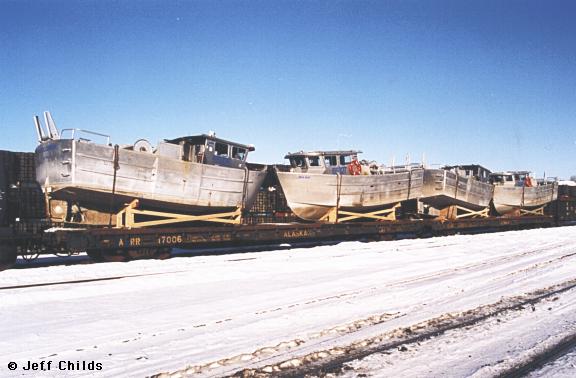
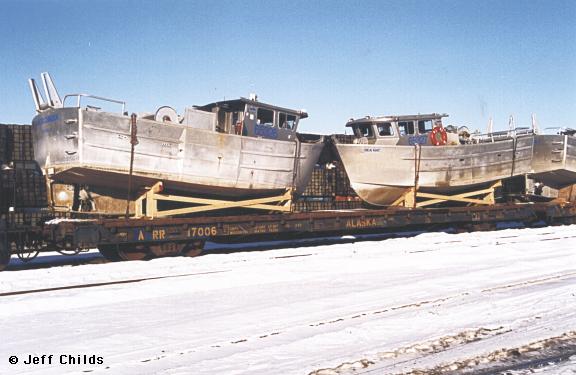
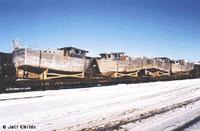
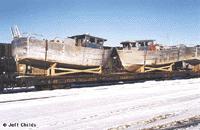
Now here is something you don't see every
day. This flat is hauling fishing boats to Whittier. 3/99 |
|
|
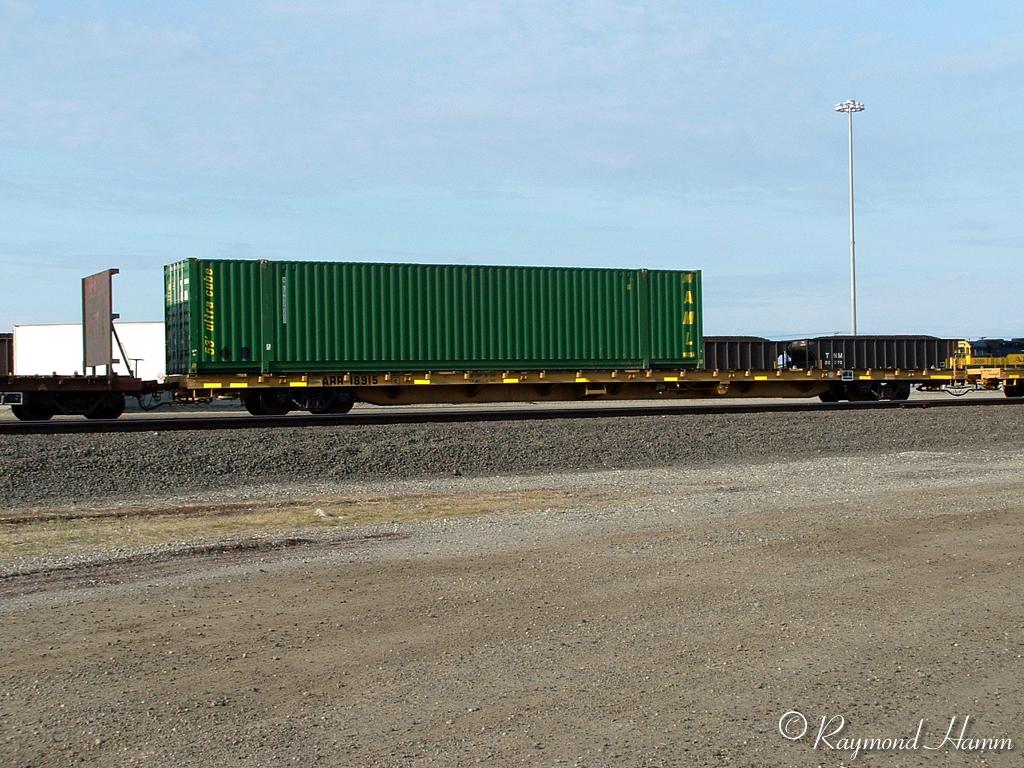
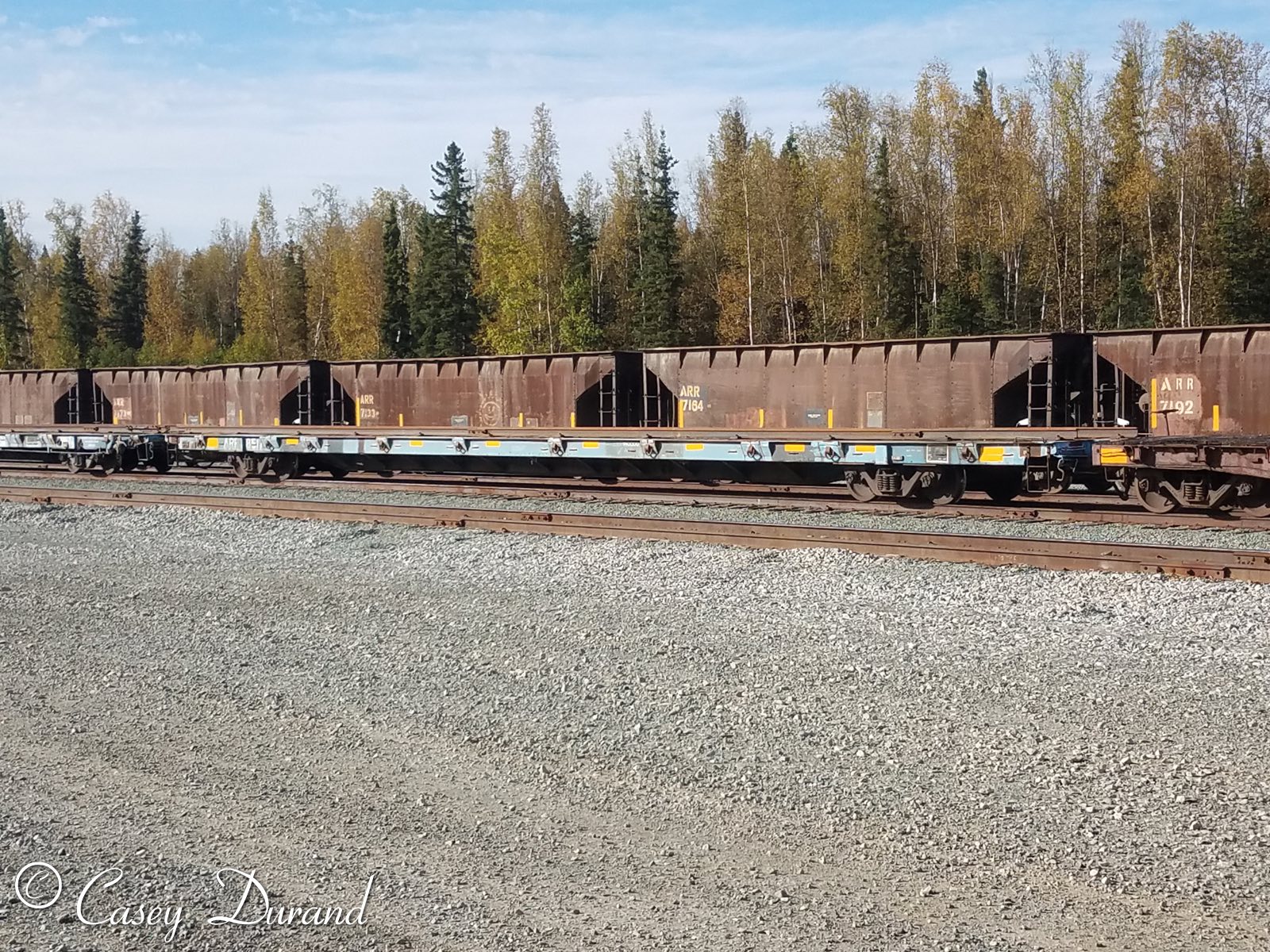
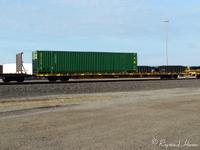
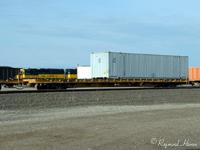
| 89 foot flatcars in the
Fairbanks yard. June 2007 |
|
|
|
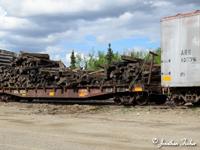 |
Here's a roster shot of flatcar ARR 95807
in spent tie service, taken in Healy on 6/8/2013. The railroad owns
seven of these special flatcars numbered 95801 through 95807. |
|
|
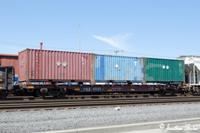
CRLE 4020 on Harbor Island on 5/31/14. While not
an ARR car per se, it does spend a lot of time going back and
forth on the barge between Seattle and Alaska.
|
 |
|
|
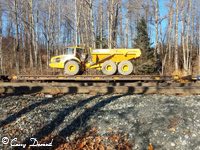 |
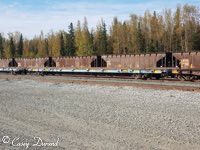
17XXX series |
|
Old flatcar bases from the original Hydro-train and the bi-level auto racks that once served WrightWay Auto Carriers in Anchorage. There are several pics of these cars loaded with heavy suburbans during the construction boom associated with the Trans AK pipeline. Fleet vehicles for Aleyska Pipeline service company too. These flats are now used exclusively in MOW service.
|
 |
|
|
Added 8/26/11:
- 40 used multi configuration COFC Flat cars, builder Greenbrier, year
built 2000, all due in Alaska by mid November |
Added 1/12/15 by Curt Fortenberry:
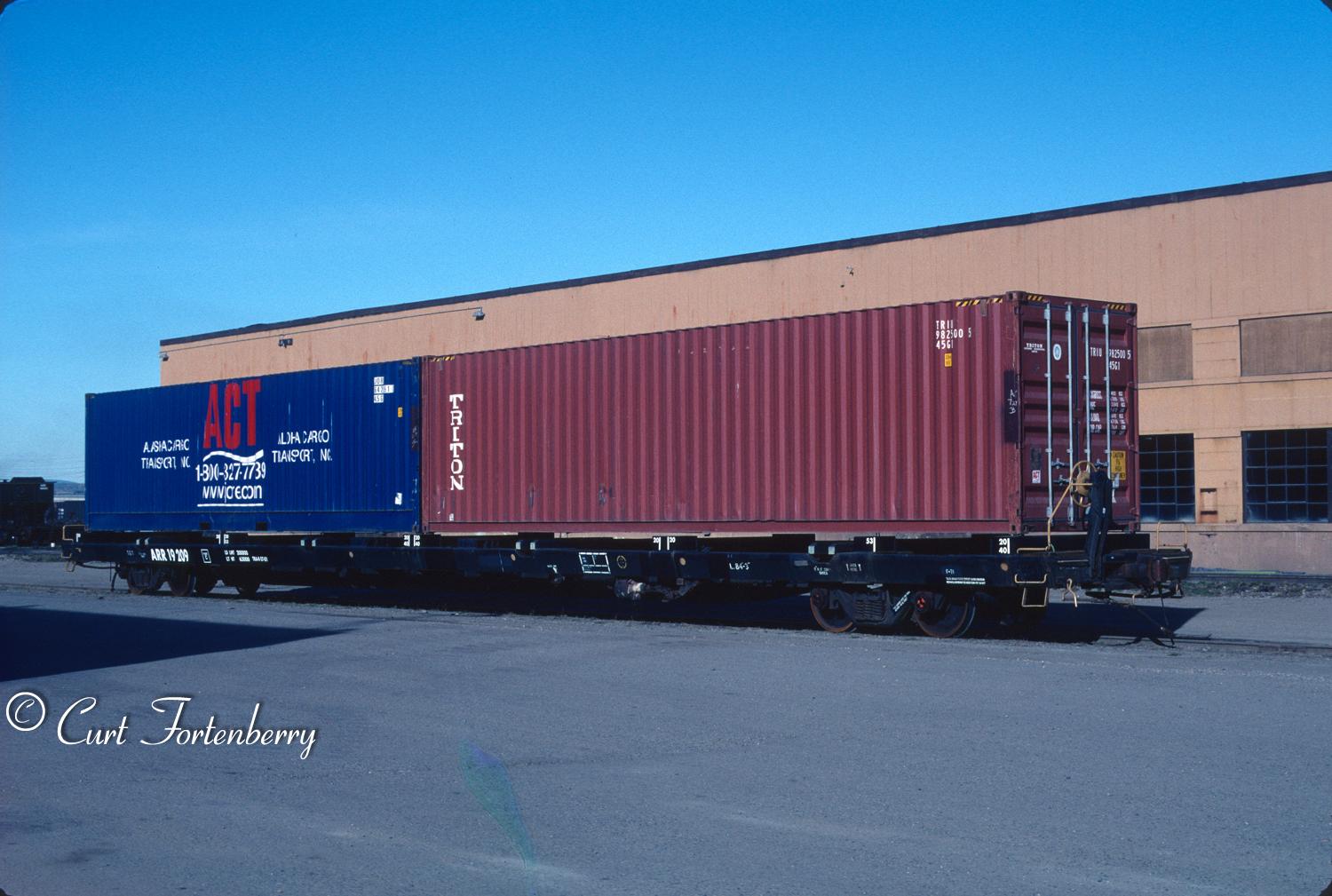
There are 20 of 19XXX
series flat cars, 19201-19220. Built in 1972 by Marine Industries
(Canada) for CN. Acquired the summer of 2001.
Added 5/17/15 by Curt Fortenberry:
- 19209 (9/24/2001)
- 19217 (9/9/2001)
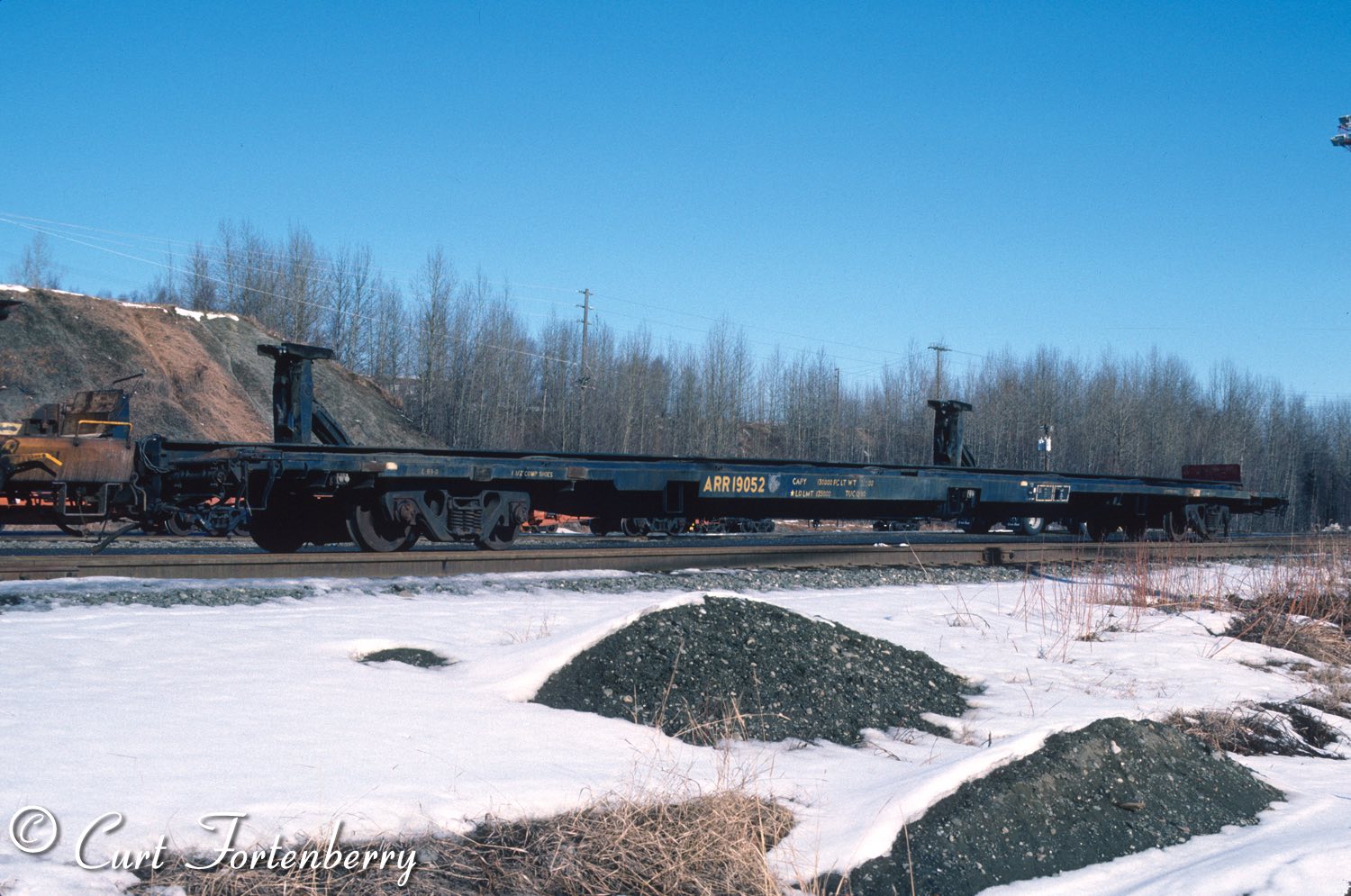
- 19052 (This is the only shot I took of this series of TOFC flats. They didn't last long apparently. All I know is what the ARR mechanical sheet says, acquired used in 1980, built by GATC 1963-64.)
Added 10/1/21 by Shane Durand - The 19XXX scrapped by CEI |
|
|
|
Thanks to Ed Alford, Casey Durand and Frank Keller for providing
this information
Page created 1/27/99 and last updated 5/27/25
|