|
Hoppers are a very common type of freight car and come in a variety
of shapes, sizes and purposes. They can be open or covered. They can
be made of steel or aluminum.
Open hoppers carry heavy bulk commodities which can be exposed to the
weather. For unloading, the commodity will flow or pour through the
hopper discharge chutes into underground pits.
Covered hoppers are designed to handle dry bulk commodities which require
absolute protection against the weather. They have a permanent roof
with hatches to facilitate loading. A hopper's interiors is shaped into
bays (hoppers) with discharge doors which allow unloading from the bottom
either by gravity, pneumatic (suction) or airslide functions. Airslide
hoppers force air between the fabric lining and slope sheets of the
car, loosening the product so that it flows easily through the outlets.
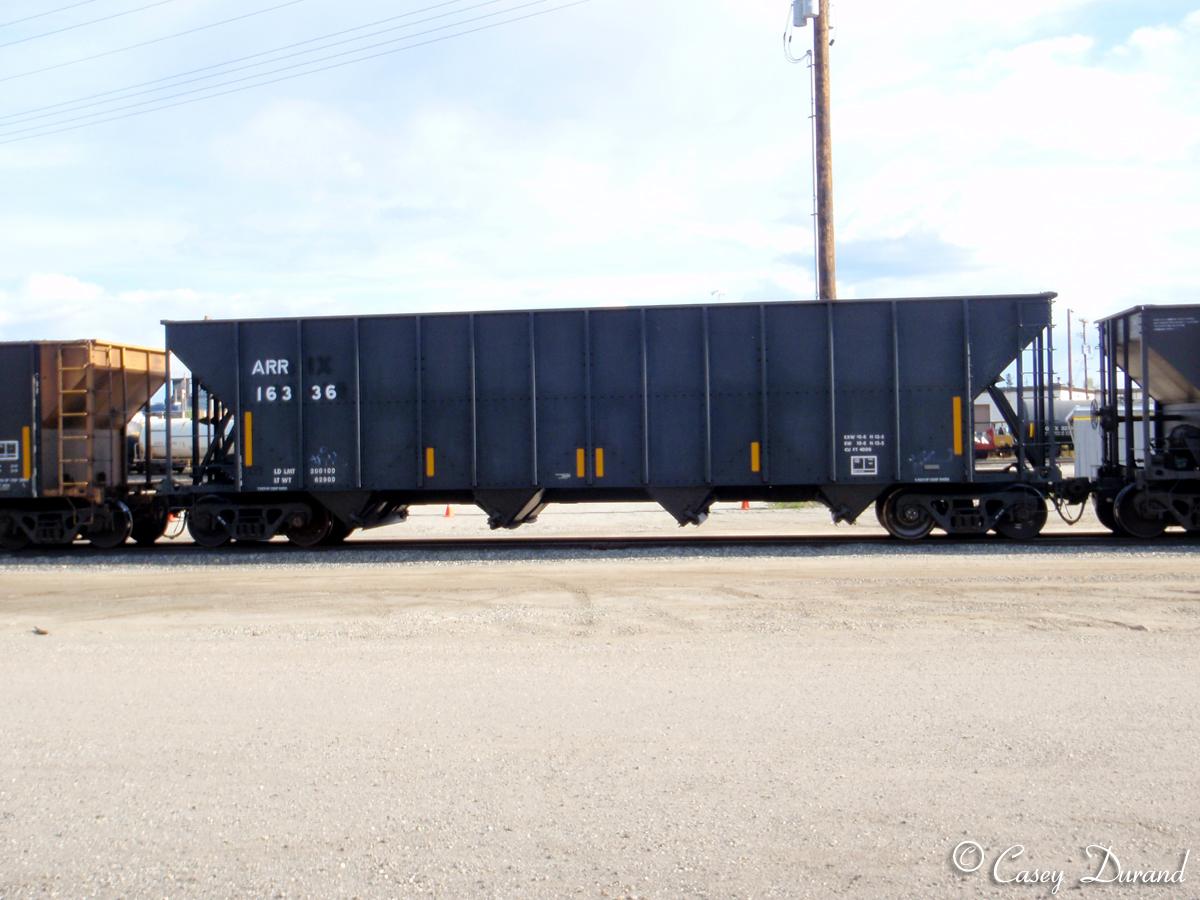
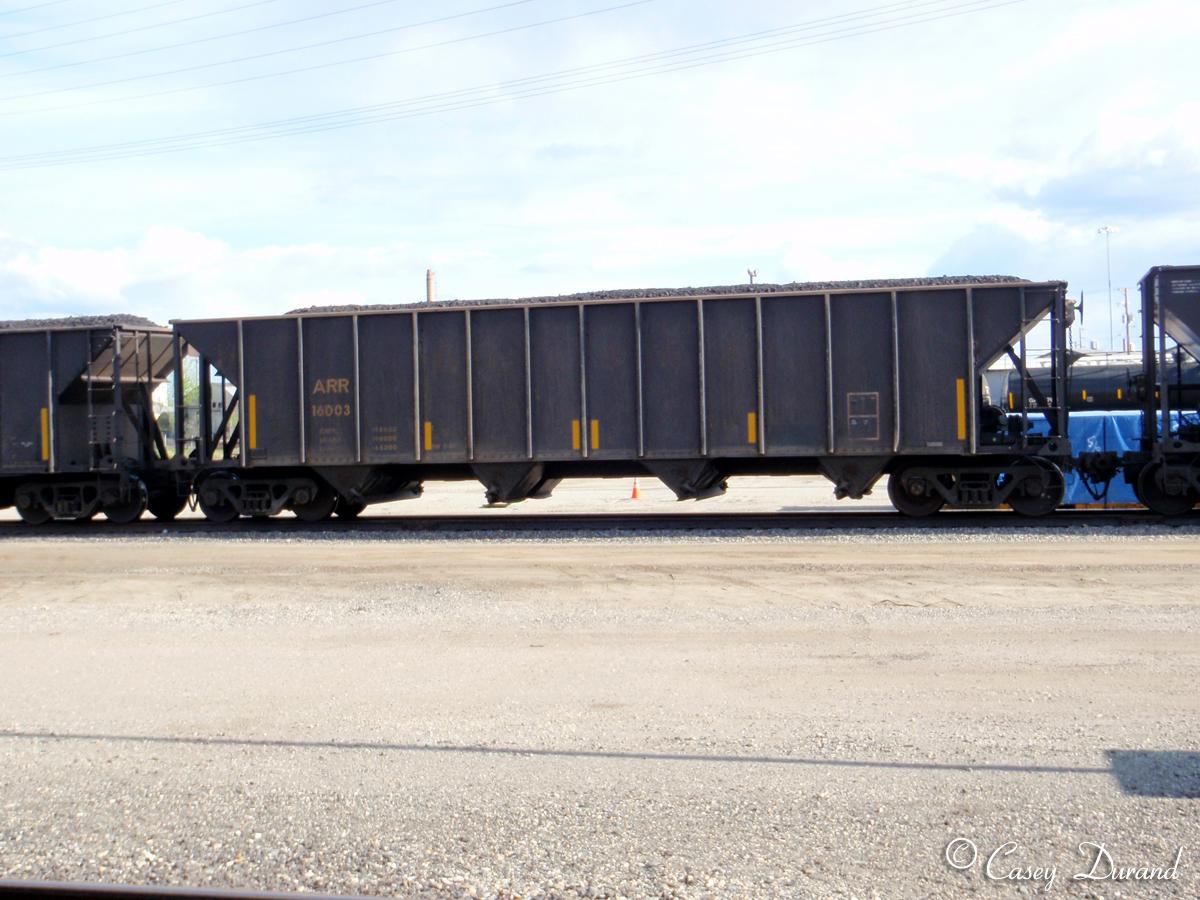
The ARR uses open hoppers to haul mainly coal, gravel and ballast while
covered hoppers are mainly for cement, chemicals and grain. Here is
an example of a hopper utilization
plan.
Click here for the hopper roster.
Also check to see if they have any leased.
Randy Thompson also has a PDF chocked full of scans from the ex-BC
Rail pressure hoppers.
|
|
Series |
Capacity |
Comments |
| 14400 |
80 ton |
3 pocket, boxcar red, Pullman-Standard |
| 14700 |
70 ton |
3 pocket, black, ex-C&O cars |
| 14900 |
70 ton |
MK ballast hoppers, boxcar red |
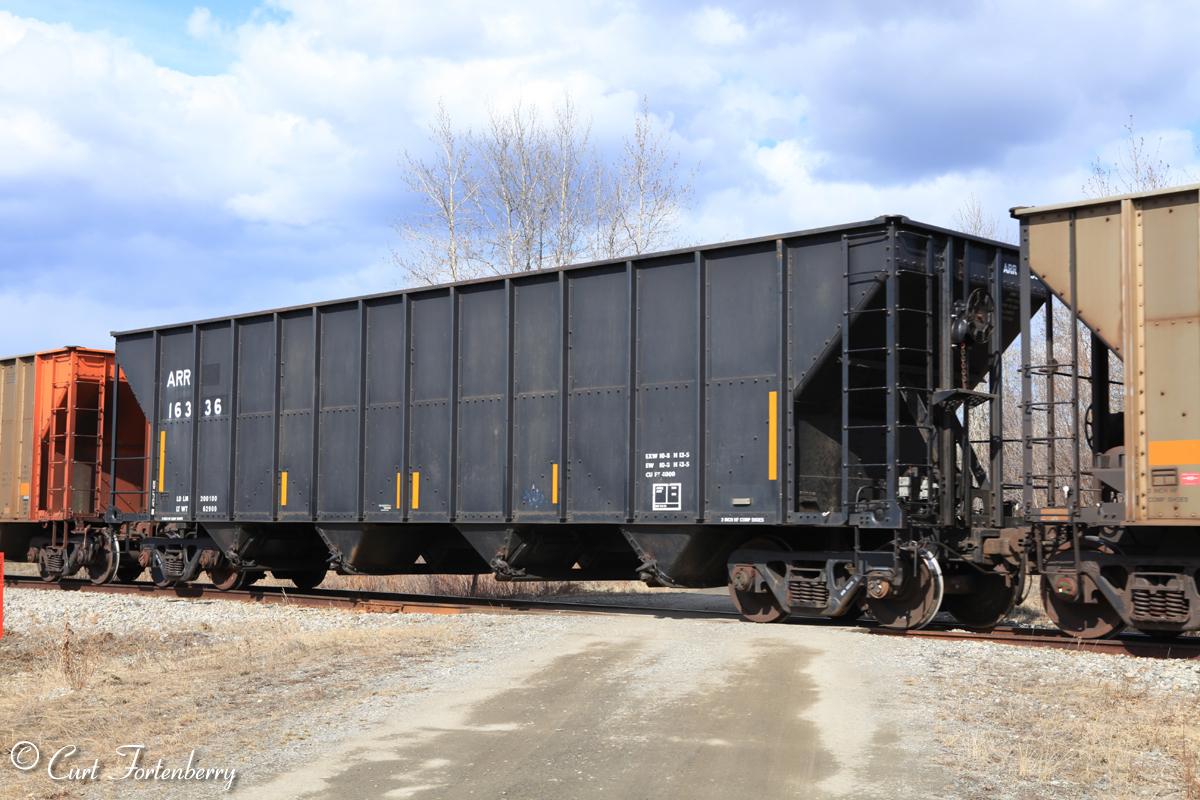
| 16000 |
100 ton |
4 pocket, 45 degree slope sheets, black |
| 16100 |
100 ton |
4 pocket, light blue, ex-AS&G |
| 16400 |
100 ton |
4 pocket aluminum |
| 16800 |
125 ton |
Johnstown, aluminum, bottom discharge, rotary, (sold August 2016) |
| 7100 |
70 ton |
ballast/coal doors, boxcar red, Greenville Steel Car Co. |
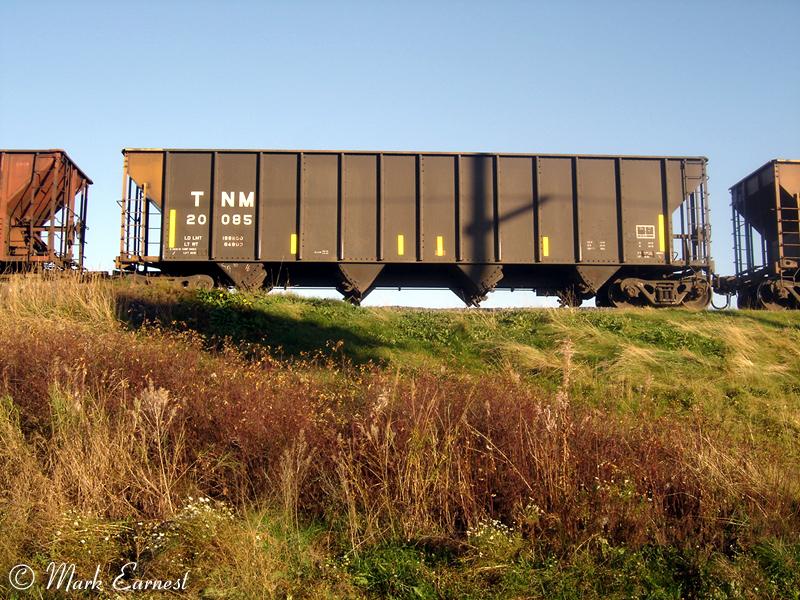
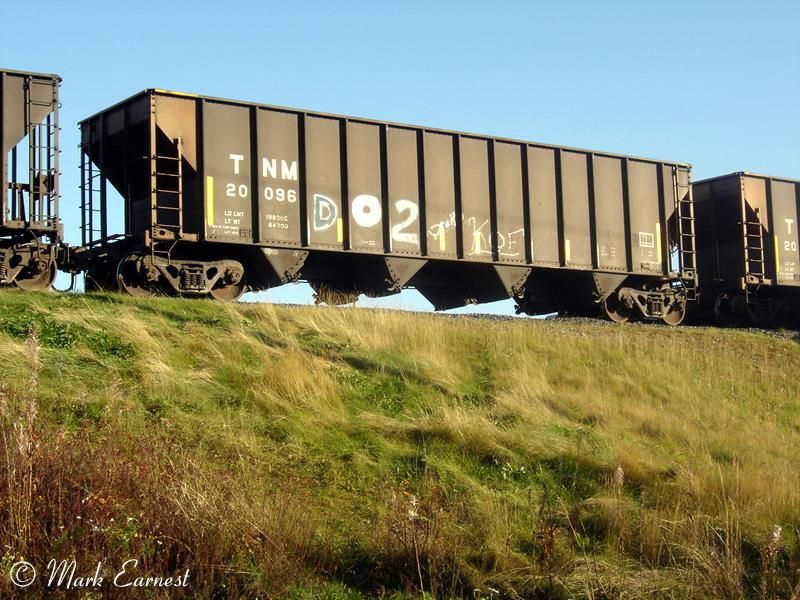
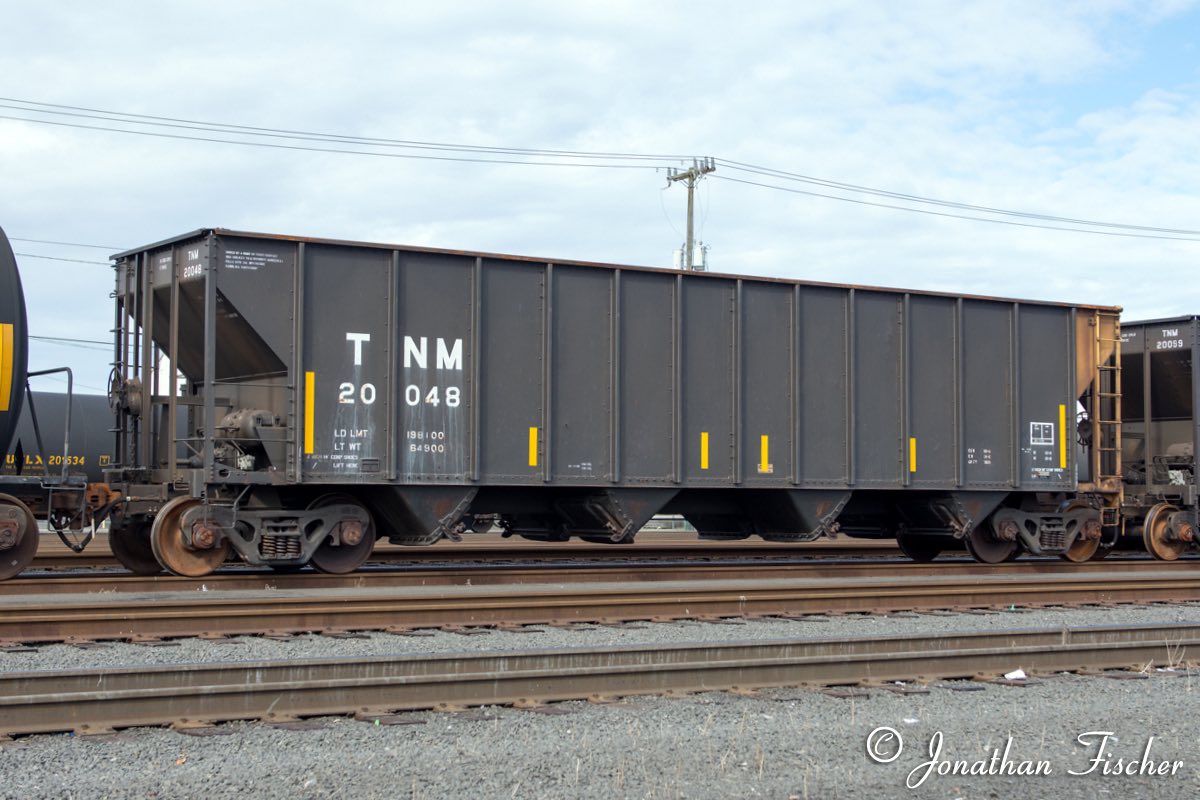
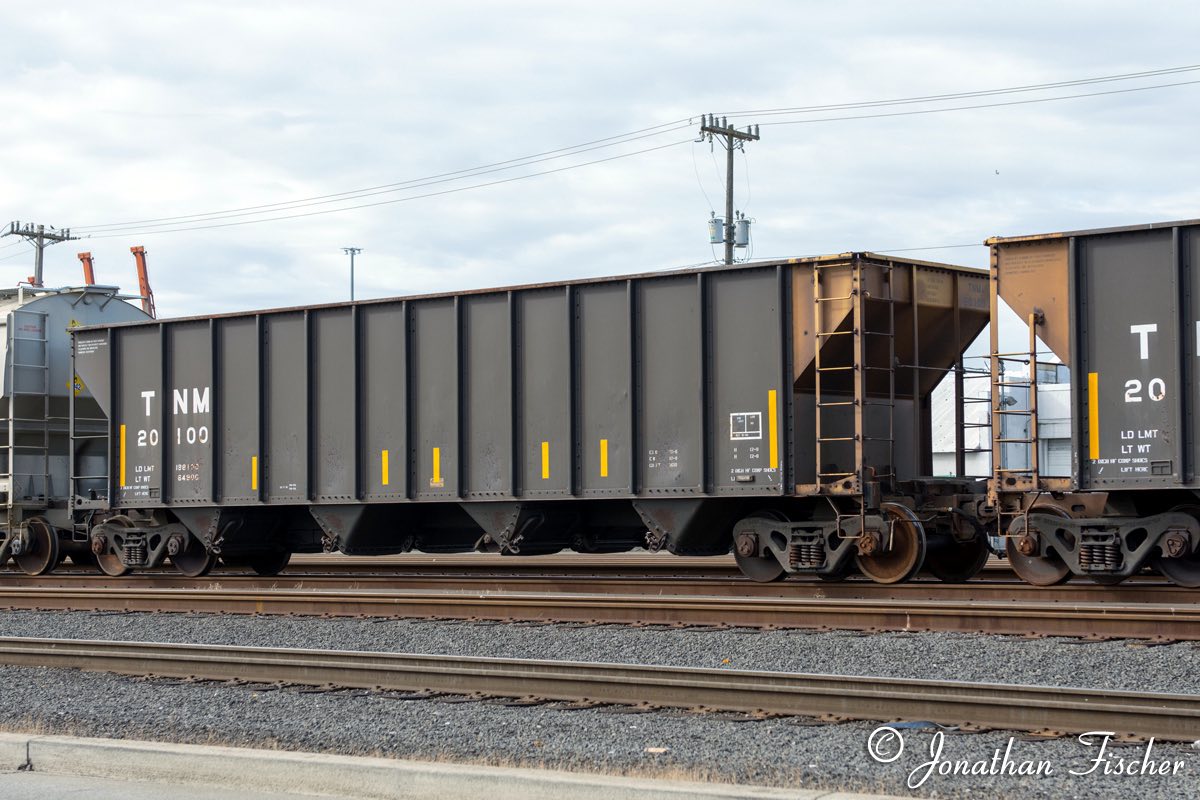
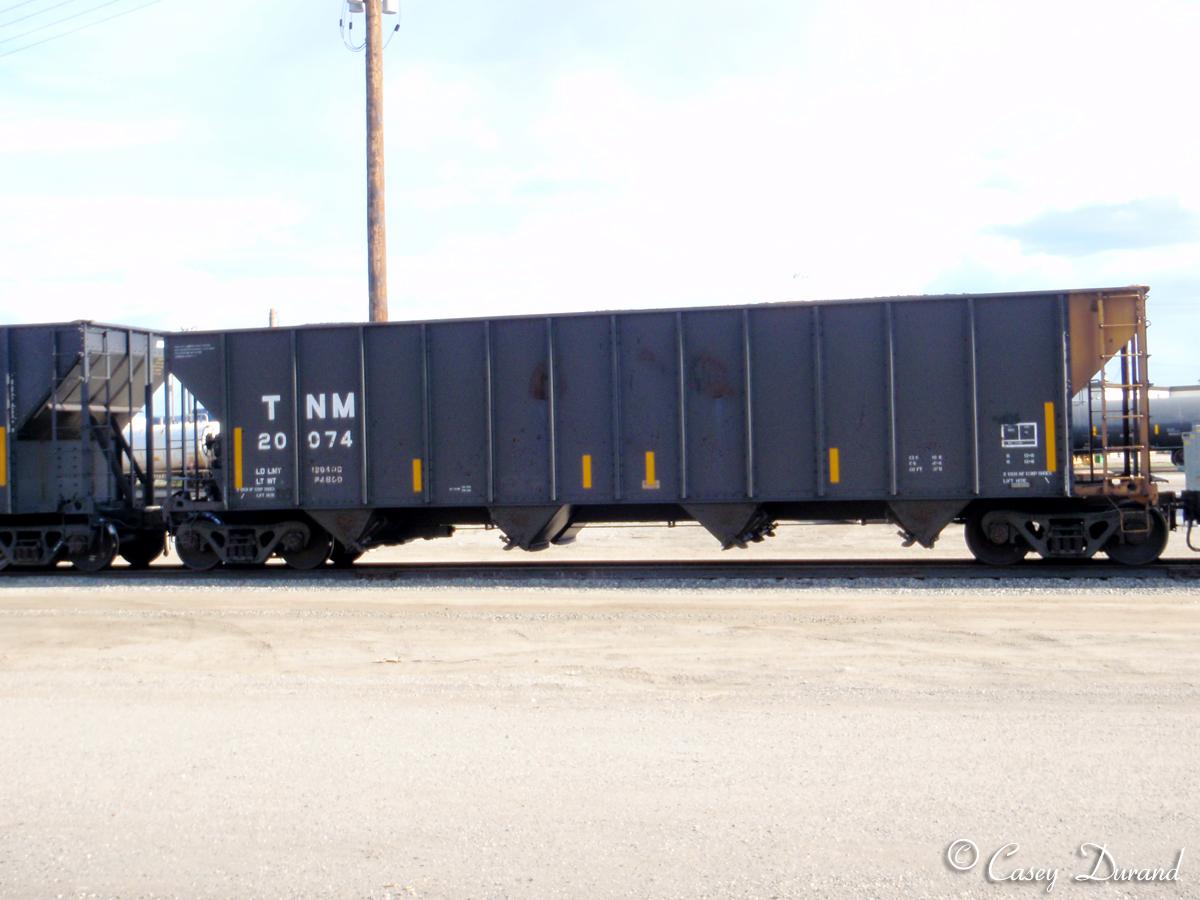
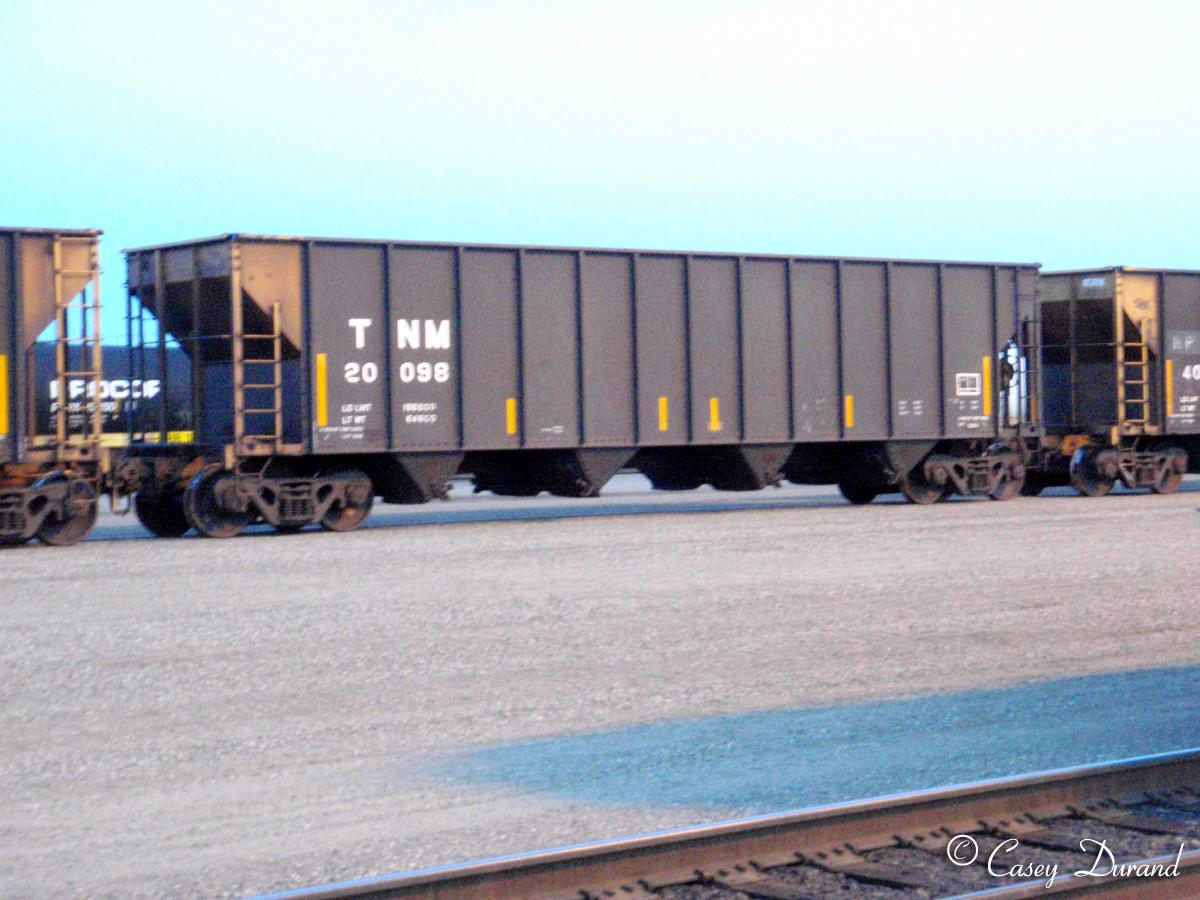
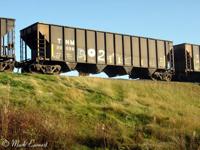
| TNM 20000 |
100 ton |
4 pocket, rotary dump, black with 1-yellow end (leased and returned August 2016) |
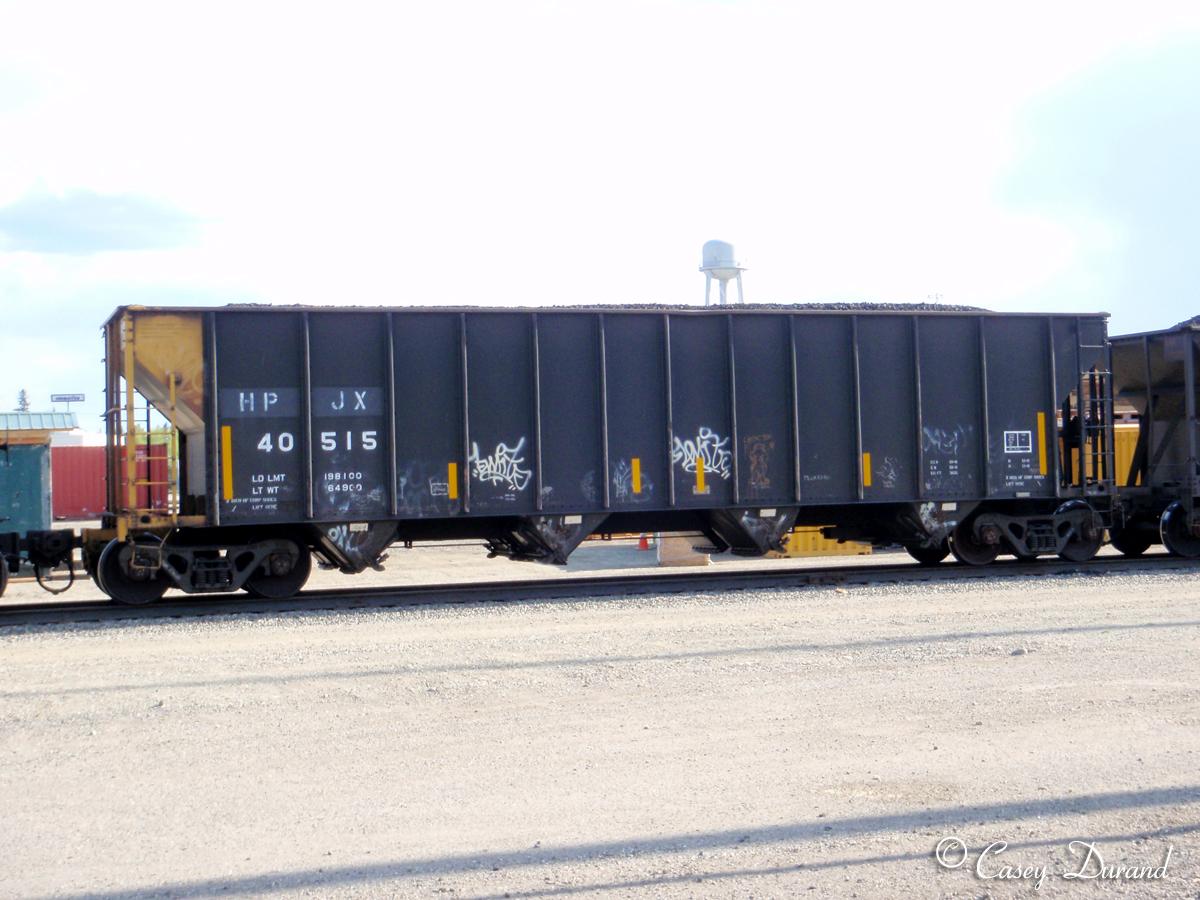
| 49599 |
100 ton |
HPJX Helm Pacific Leasing (leased and returned August 2016) |
|
Click on the pictures below for
a larger view and additional information.
|
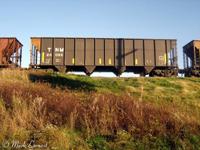
| TNM 20000, 100 ton, 4 pocket,
rotary dump. |
 |
 |
|
|
As you know, I work on the "North-end" (Healy/Fairbanks).
Although I have taken quite a few Hyundai (Seward) trains from Healy
to Anchorage, I have never gone south of Anchorage with one. The only
thing that comes to mind is "Yellow-Bands". The Seward Coal
or "Hyundai" Trains and many of our gravel trains are made
up largely of "TNM" series, 100 ton hoppers. If you don't
know already, "TNM" series coal hoppers have one end painted
yellow. This is because the knuckle on that end spins 360 degrees on
a rounded drawbar. Down South (in your neck of the woods), many coal
and gravel trains are unloaded 3 to 5 cars at a time by a section of
track equipped with grabbers that physically holds the cars on a section
of track and flips the TNM cars upside down while they are still attached
to the train. This is a much quicker (and a more expensive) way to dump
a train. We lease those hoppers for our coal and gravel operation but
we don't have any "flipping" tracks up here, we simply use
the doors in the bottom of them to dump them.
Anyway, TNM hoppers cannot be coupled with the yellow
ends together because of the rounded drawbar. If you hooked them up
with the yellow ends together, the knuckles could rotate to a horizontal
position, causing the train to come apart in a curve. We try to keep
all of the yellow bands facing one direction, either north or south
to help keep this from happing when making trains. If they weren't,
making up a train is aggravated because every time you came across yellow
ends facing opposite directions, you have to either loop or wye the
cars, or find a "non-TNM" series hopper to stick between them.
If cars are ever looped or wyed during the unloading operation, then
they would have to be looped or wyed again to get them in the same orientation
for arrival in the Anchorage yard in case the train was to be broken
up to build other gravel or coal trains.
Brett Brown
Alaska Railroad locomotive engineer
4/28/02
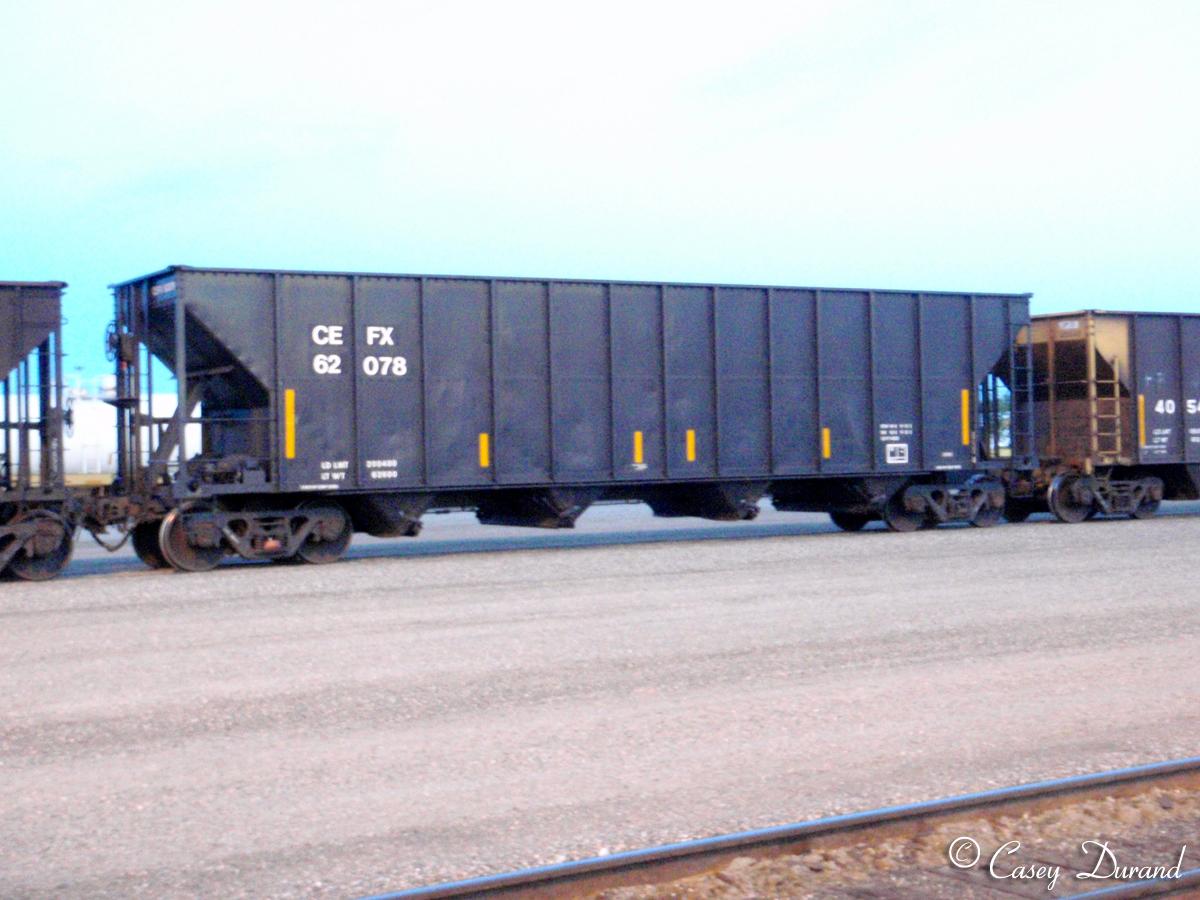
8/25/16 Update: These leased units were returned August 2016 due to the downturn in the coal market.
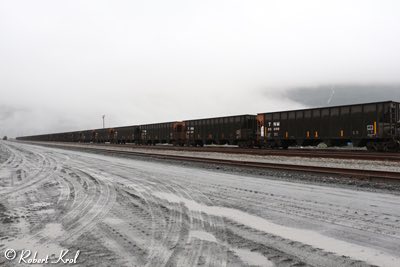
Thirty TNM hoppers in Whittier waiting for the barge. These leased units
are being returned due to the downturn in the coal market. (8/25/16)
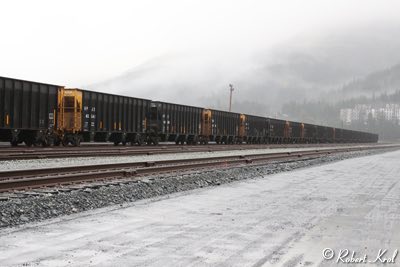
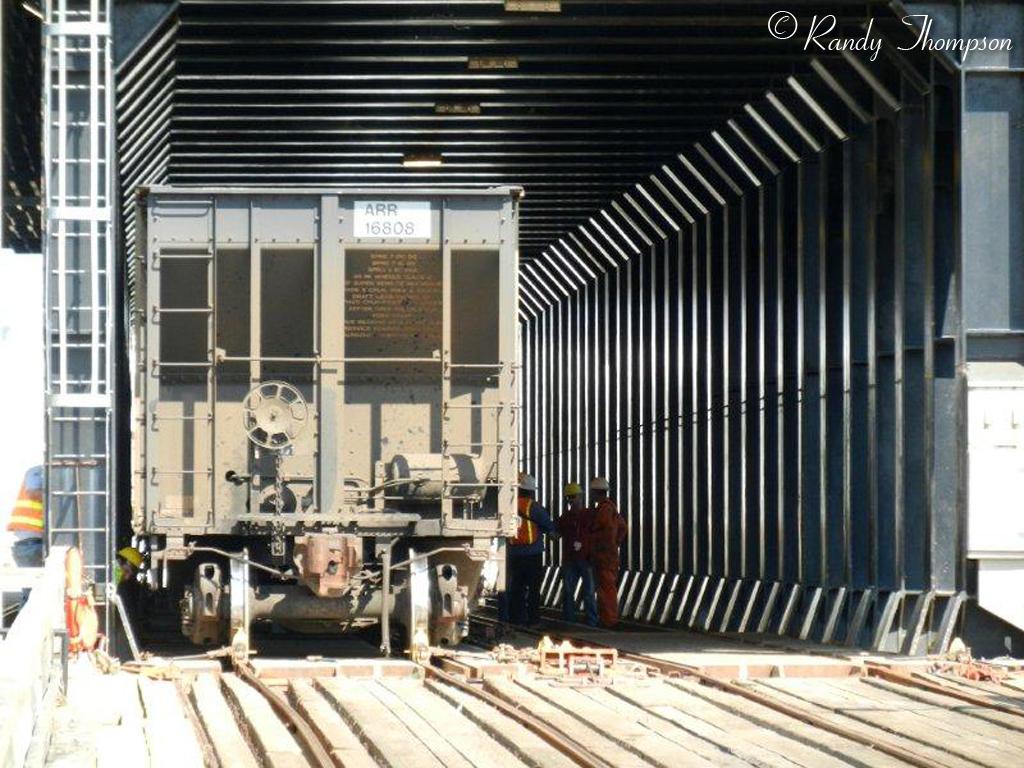
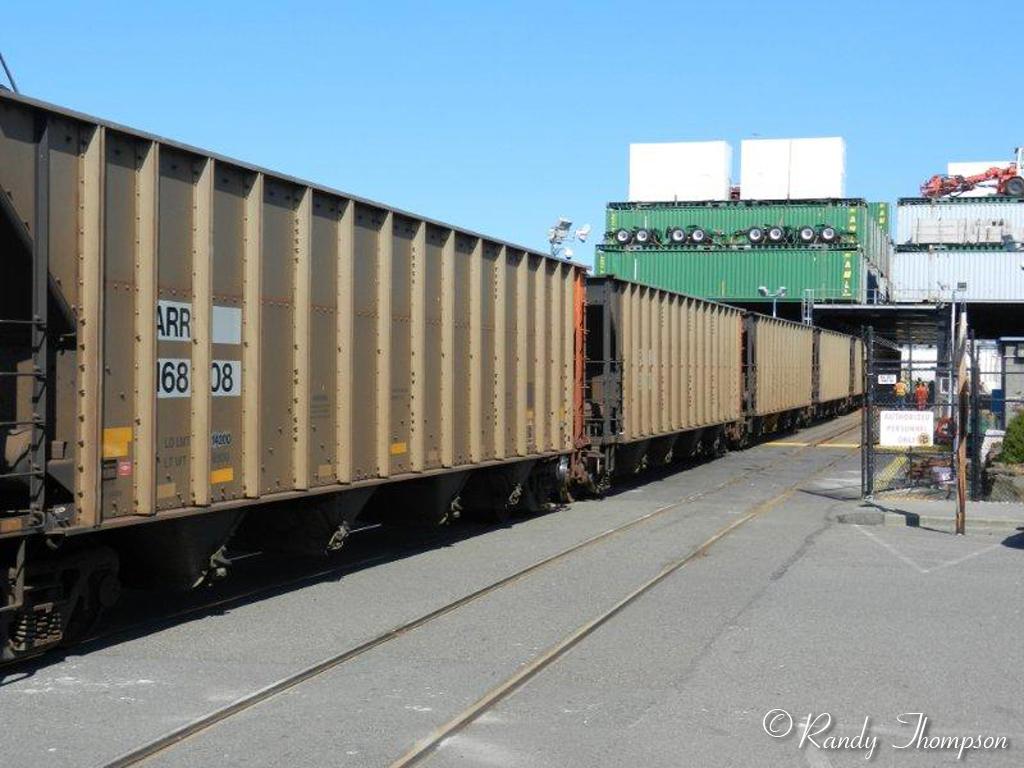
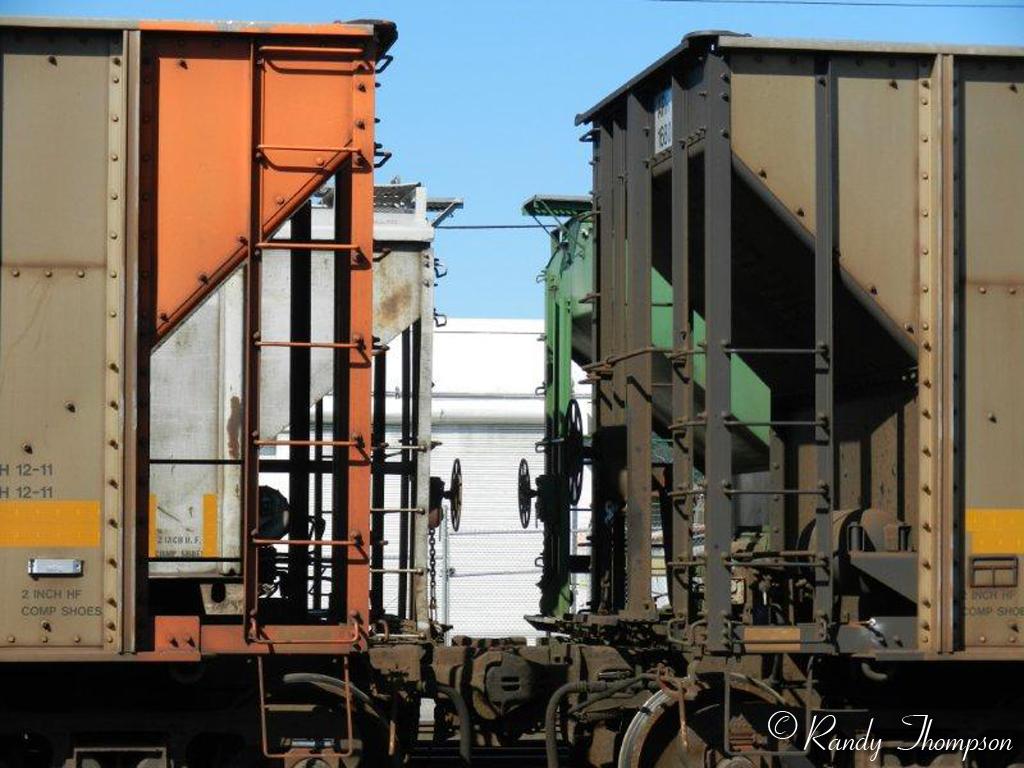
Thirty HPJX hoppers in Whittier waiting for the barge. These leased units
are being returned due to the downturn in the coal market. (8/25/16)
|
|
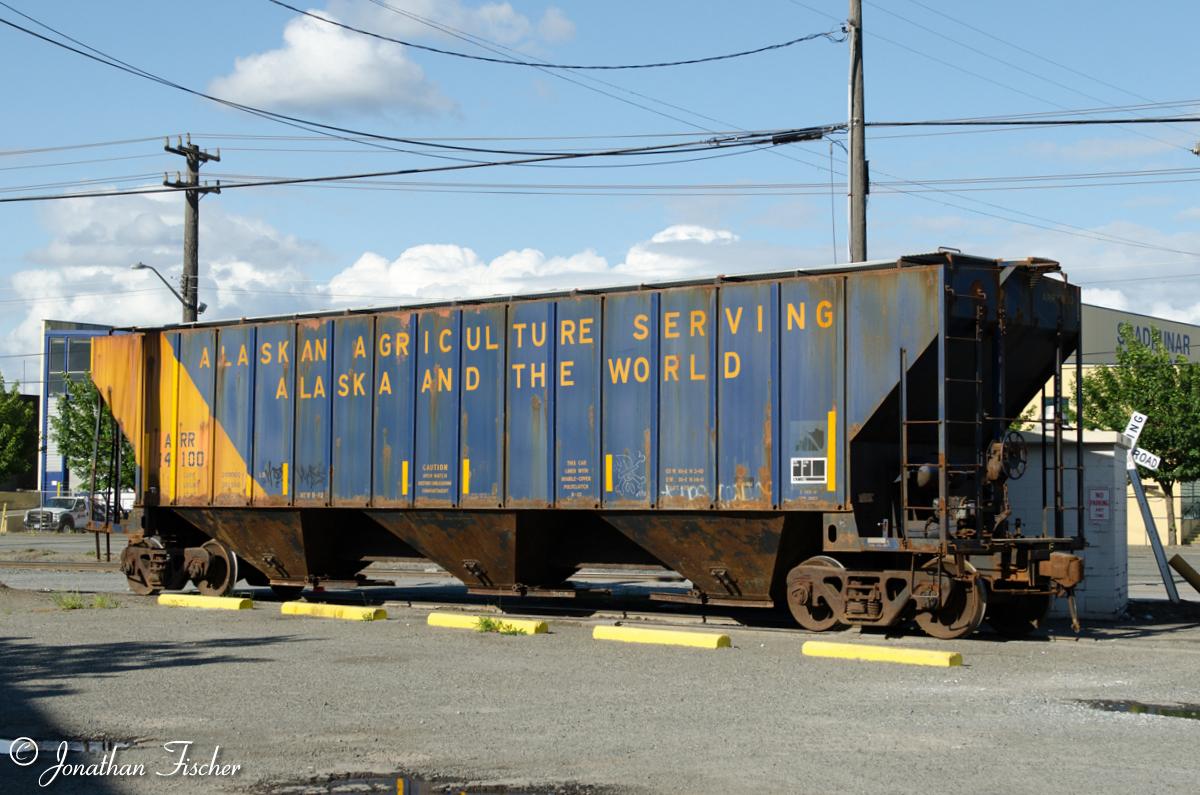
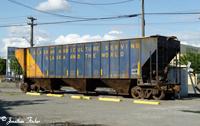
| ARR 14100 along East Marginal Way South
in Seattle on 5/26/14 |
 |
|
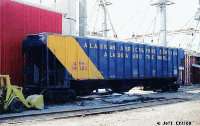 |
ARR covered hopper at Alaska Mill and Feed. |
|
|
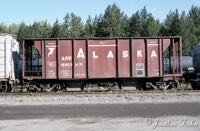
| MK ballast hopper. |
 |
|
|
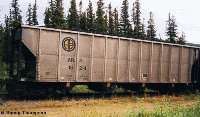 |
New aluminum hopper with ARR herald. |
|
|
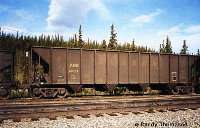
| Quad hopper with stencil lettering. |
 |
|
|
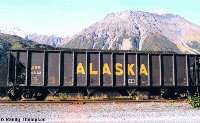
 |
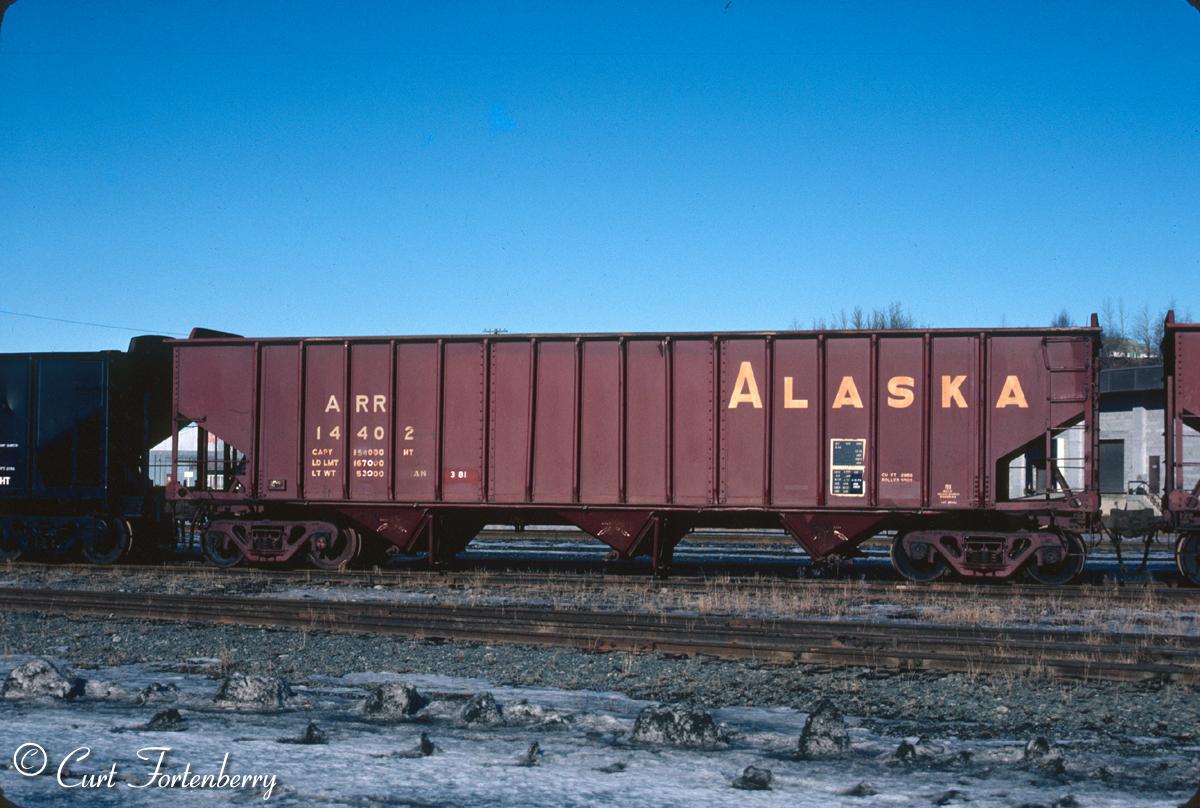
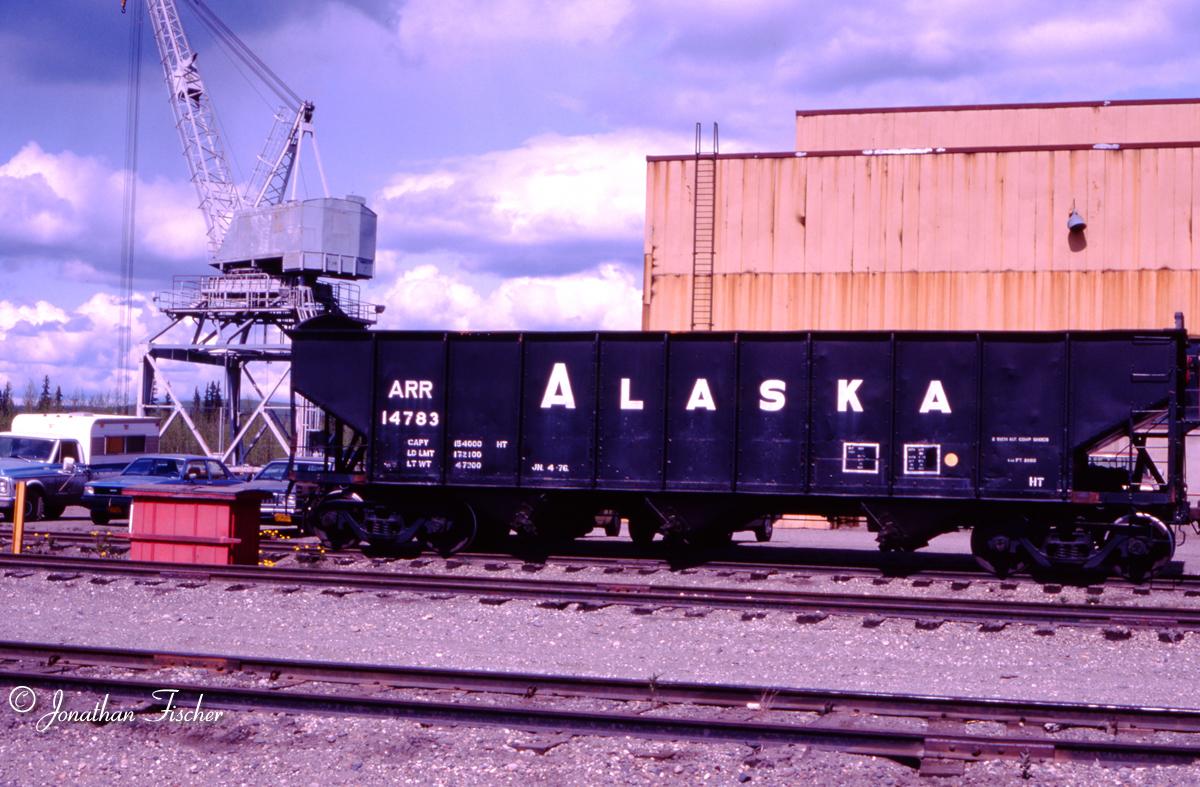
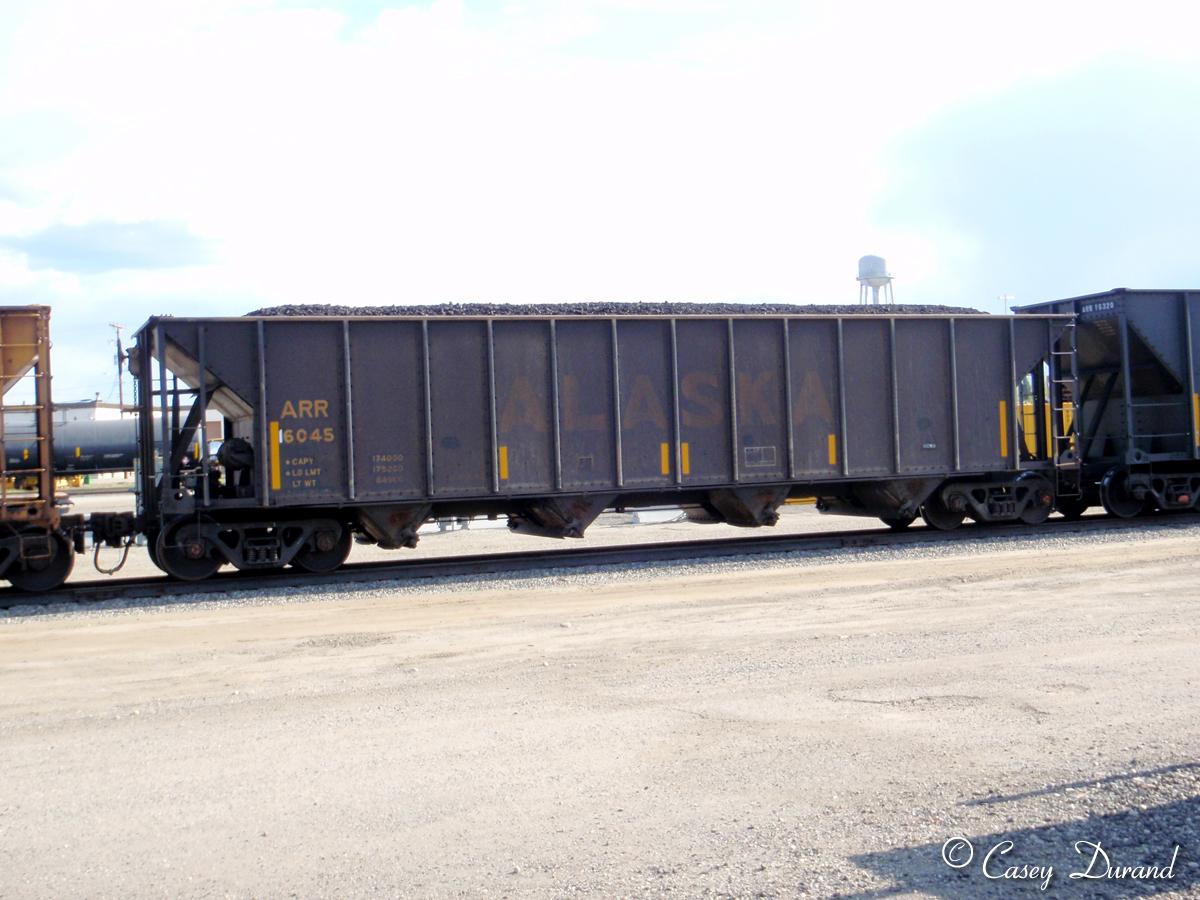
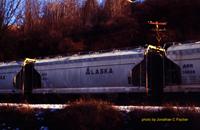
Quad hopper with large "Alaska". |
|
|
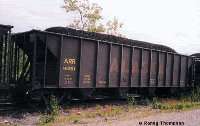
| ARR coal hopper |
 |
|
|
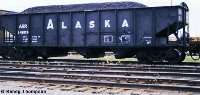 |
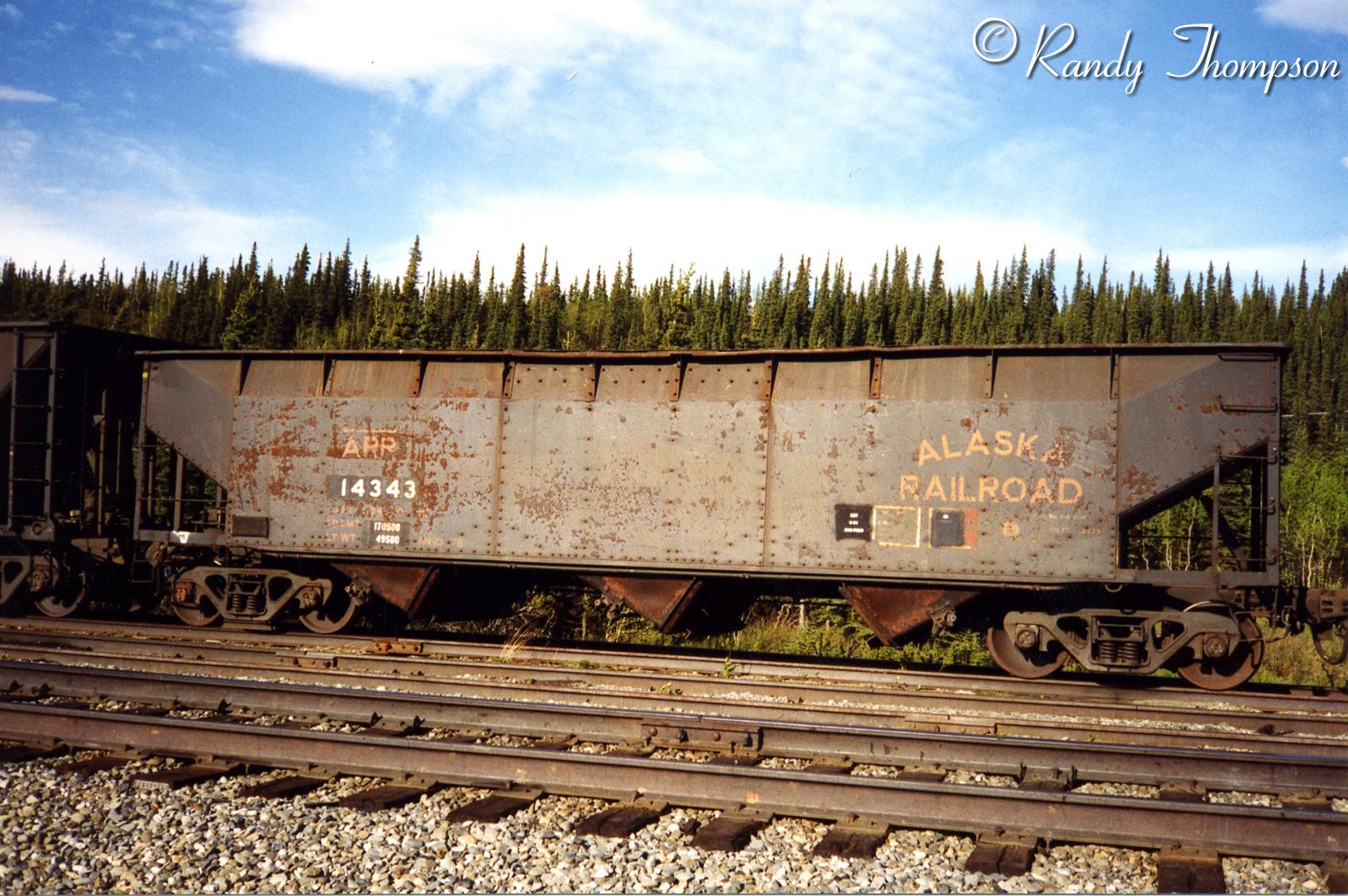
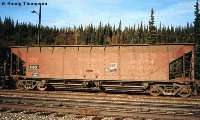
Old three bay ribbed hopper. These are nearly
extinct on the Alaska Railroad. |
|
|
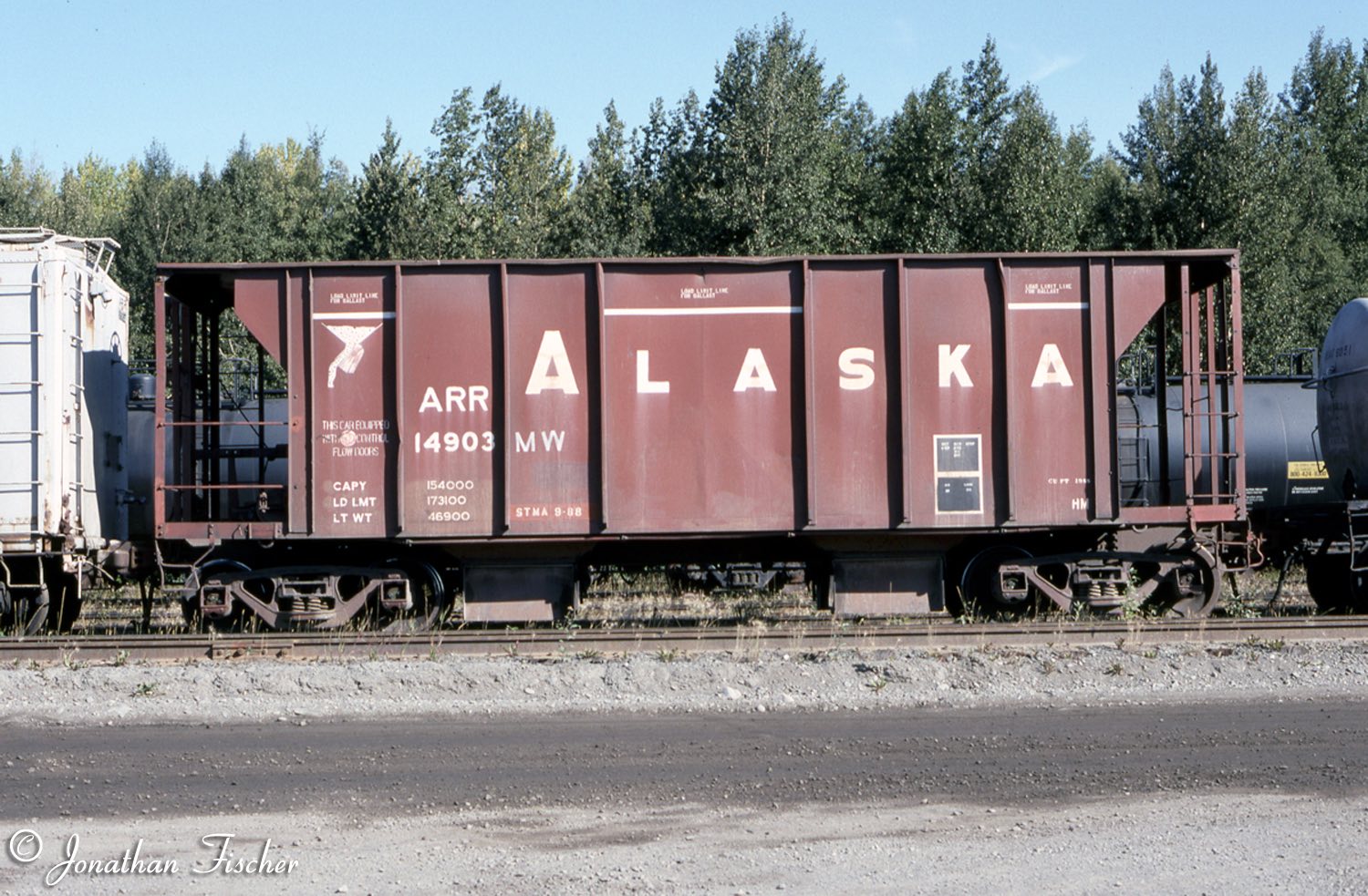
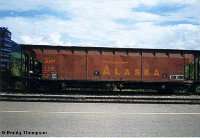
| Ballast hopper with very rare large "Alaska"
lettering. |
 |
|
|
 |
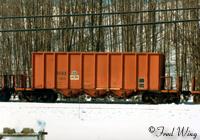
Ballast hopper with normal "Alaska Railroad"
lettering style. |
|
|
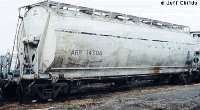
| A 54-ft. covered hopper with
3,700 cubic feet capacity, 6 round hatches at center, 3 bays and
3 outlets. |
 |
|
|
| Hopper #14607. Click here
for more information. |
 |
|
|
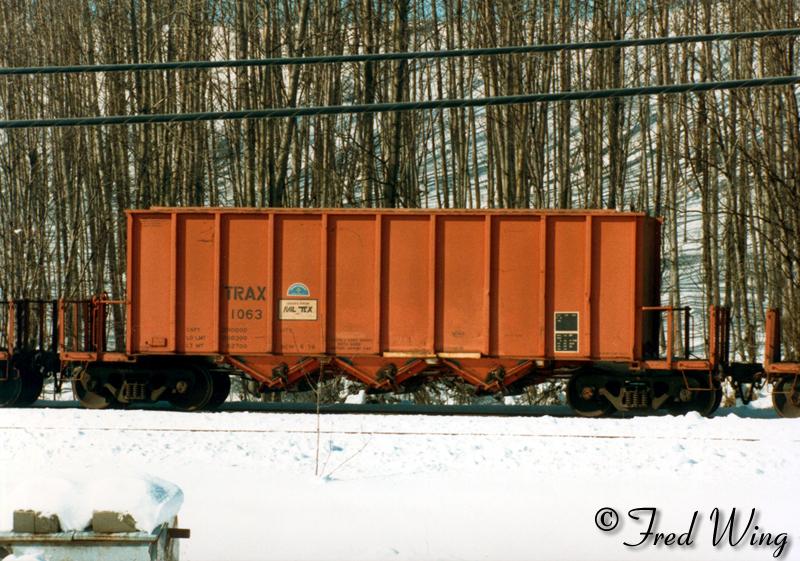
| Bob Garner says, "These
Ortner rapid discharge hoppers were leased for a while, but were
not suitable for both coal and gravel and were returned." |
 |
|
|
On 4/17/04 Jason Kuehn adds, "The Alaska Railroad
leased a string of these - 60 cars I think - from RailTex back before
RailTex was a shortline operating company and they were mostly into
car leasing particularly for the aggregates business.
These are Ortner (now Trinity Industries) rapid discharge cars designed
primarily for handling aggregates. They are the best car on the market
for this type of commodity. The 60 degree slopes sheets provide for
a fast clean unloading of commodities like sand and gravel without using
a car shaker. Unfortunately the ARR the gravel season only lasts 4-5
months due to the weather.
These cars have a cubic capacity of only about 2,000 cubic feet (plus
or minus 10%). So they only can handle 60-65 tons of coal when used
in coal service in the winter as much of the ARR fleet started doing
when the Seward coal move started. But they weigh nearly as much as
a standard hopper so they are not very efficient cars for coal handling.
You will also notice the long platforms on the ends of the cars and
the relatively short car body. This is a major pain for loading in motion
like is done with the Usibelli tipple and the current gravel terminals
in Anchorage. It is really easy to start the loading early or end late
in trying to fill the car as full as possible and spilling material
on the end platforms.
So these cars were not well suited to the evolving needs of the ARR
for a flexible hopper car fleet. The ABI blue rapid discharge hoppers
worked much better for handling coal in the winter and flood loading
both coal and stone. I think the ARR had the TRAX cars on lease for
three years in the mid-1980's and then returned them, opting for more
conventional hopper cars. Being a specialized car designed specifically
for stone they had a fairly high lease rate as well.
There are a couple of photos in the Nicholas Deely book of one of these
cars in a freight train (probably handling coal) in the winter time.
On 11/16/04 Pat Durand adds, "Some
years ago the Alaska Railroad leased a string of Ortner Three Bay Rapid
Discharge hoppers. Here are two views showing both ends of the cars.
Modelers note: Microtrains has just announced an N scale version Item
#125010."
On 12/3/20 Curt Fortenberry adds, "Another reason these weren't well suited was because the doors were air operated, and it was all open or all closed, nothing in between. So they couldn't be selectively unloaded."
|
|
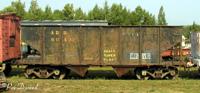 The
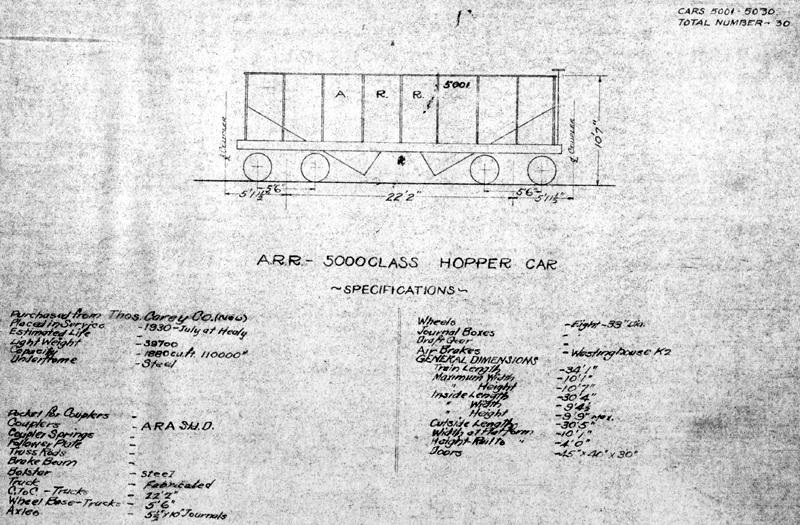
Alaska Railroad has rostered a variety of hoppers over the years. On
the 1931 Equipment Register 12A there is only reference to Coal Cars
not hoppers. I believe these were Hart Convertible Gons dedicated to
coal service. The
Alaska Railroad has rostered a variety of hoppers over the years. On
the 1931 Equipment Register 12A there is only reference to Coal Cars
not hoppers. I believe these were Hart Convertible Gons dedicated to
coal service.
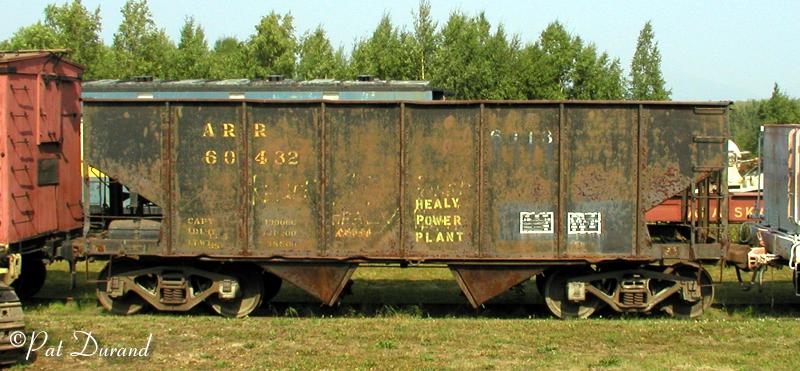
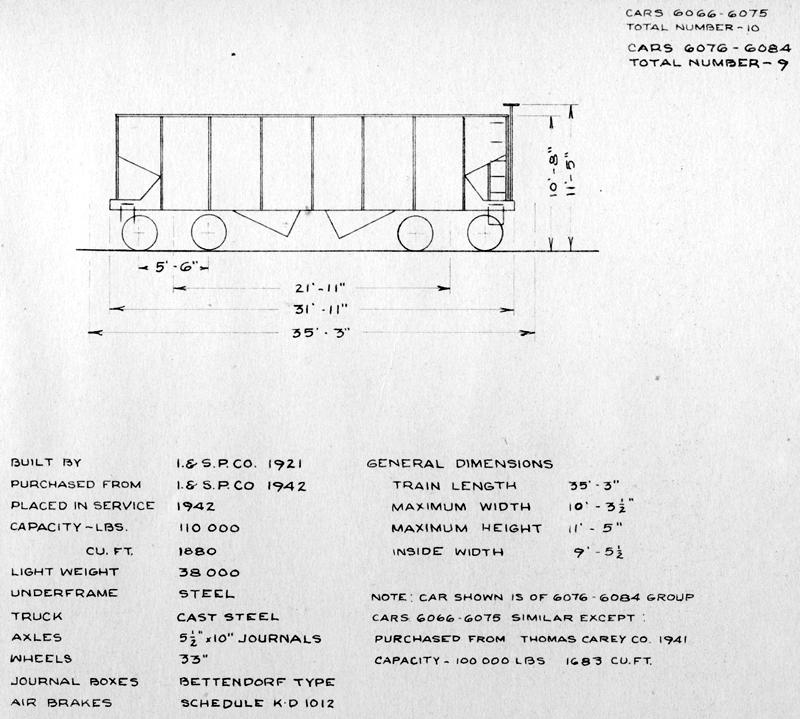
On Equipment Register 12G of 1963 there were four different
number series of Twin Hoppers. At the Museum of Alaska Transportation
and Industry is Hopper 60432 which through the weathered paint shows
original number 6043 in white. This car was dedicated to the Alaska
Railroad Power Plant in Healy and thus made the short trip from the
Suntrana Tipple to the ARR power plant along side the main line in the
Healy Yard.
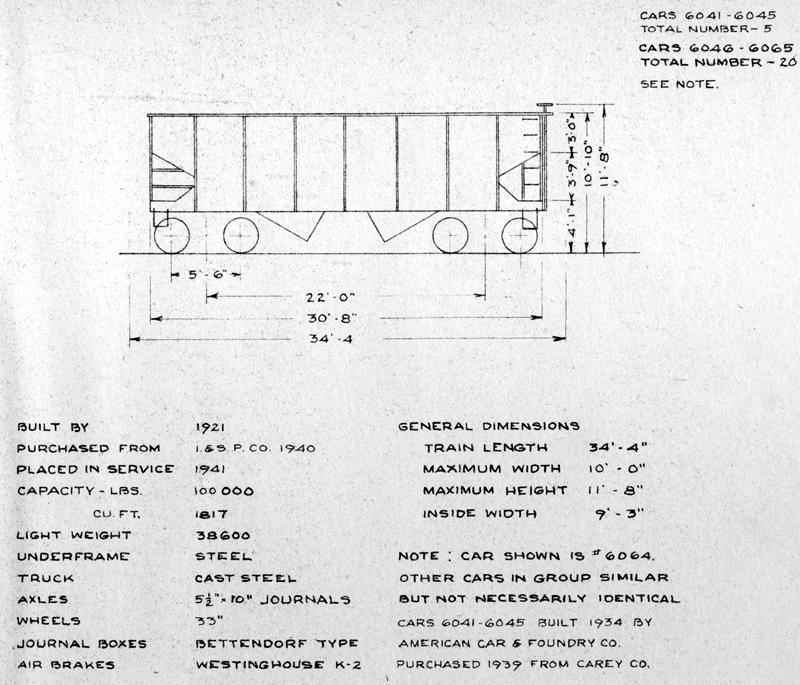
There were only five cars in the series 6041 - 6045 as
of 1963 and they were rated at 100000 lbs or 50 ton. The car body is
30'8" long and 10'10" high with internal capacity of 1817
cu ft. Modelers note: Stewart Hobbies Fishbelly 55 ton 6 panel 2 Bay
Hopper in HO is a dead ringer for 6043. Accurail also produces a very
nice kit for the 2500 Series USRA Twin Hopper that matches this car.
Prepared by Pat Durand
|
|
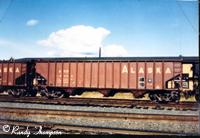 |
14XXX series hoppers |
|
|
| Anchorage Sand & Gravel
(ASGX) #606 in Nenana. Paccar built this car only for this one time.
They were ASGX 601-680. ARR managed the cars and eventually took
ownership in the late 1980's in exchange for favorable rates for
ASG. 4/83 |
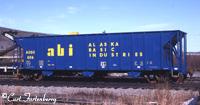 |
|
|
|
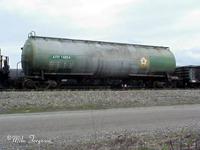 |
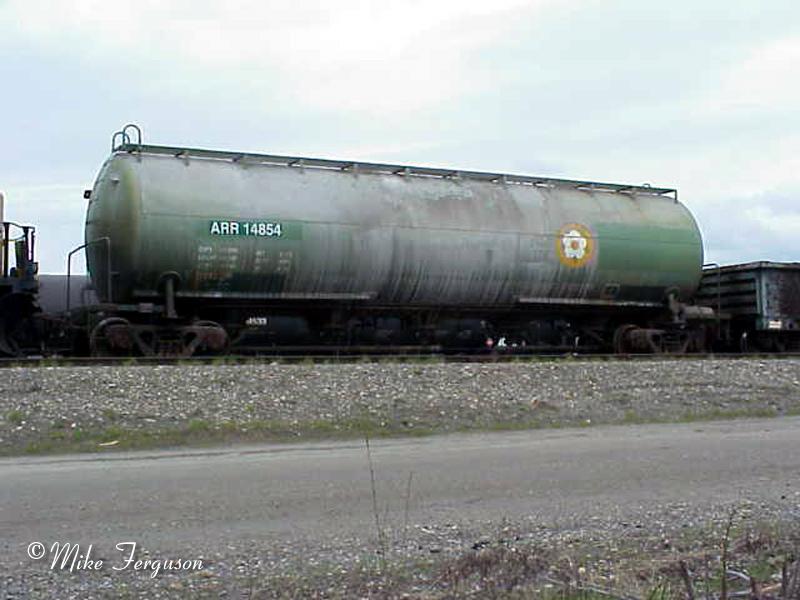
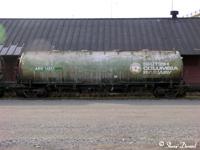
New (actually used) ex British Columbia Railway cement hopper,
numbers 14850-14859. 5/13/04 |
 |
|
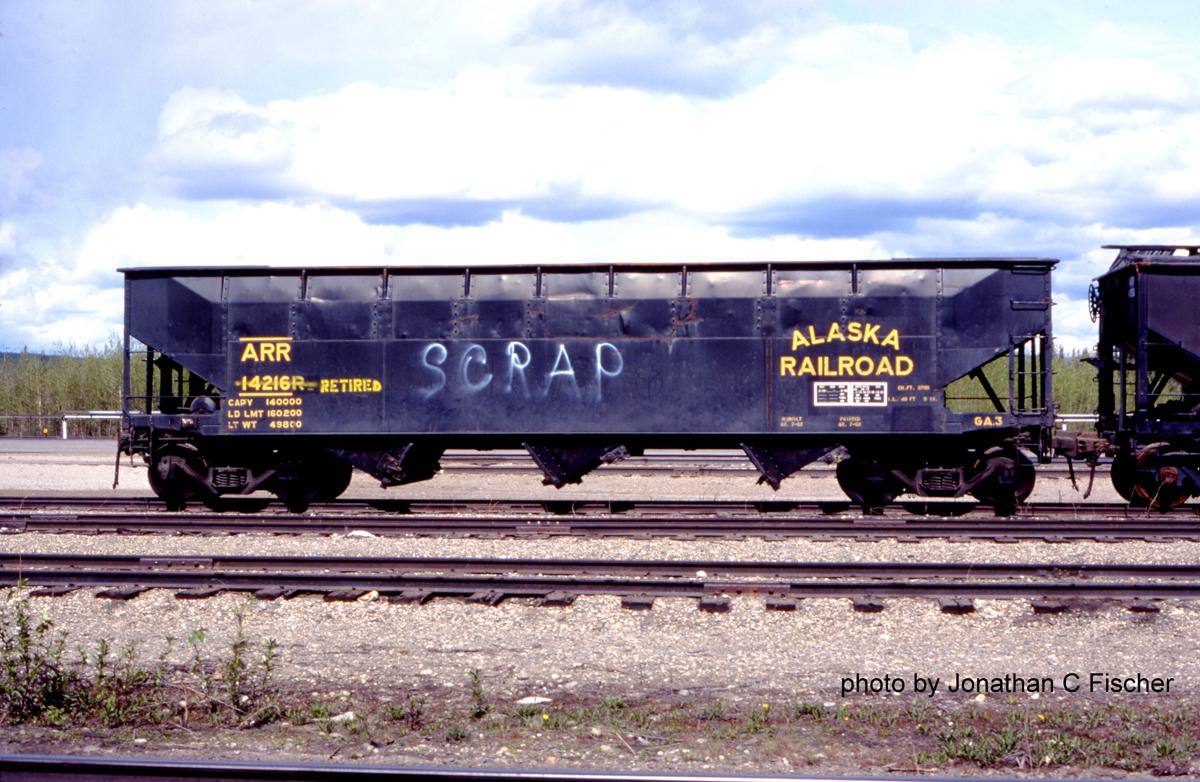
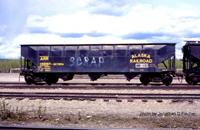
| The following
information is from The Official Railway Equipment Register of October
1974: The 14216 has an AAR Mechanical Designation of HT in the Equipment
Register. However the 14216 has GA-3 painted on the lower right
hand side of the car where typically the railroad applied the mechanical
equipment designation. Either definition is accurate. Both the GA
and the HT are open top car, having fixed sides and ends and drop
bottom, consisting of doors hinged crosswise of car, to dump between
the rails. The HT contains the additional specification that there
are three or more divided hoppers with doors. The 14216 was of the
second largest class of cars on the railroad with 208 cars in the
group numbered from 14000 to 14279. In October 1974 this group of
cars represented 14.3% of all cars on the railroad. (208/1454 total
cars) The 14216 was 41'5" long. It had a capacity of 2700 cubit
feet or 140,000 lbs., whichever was less. In this picture the 14216
has been retired and is awaiting the scrappers torch. Fairbanks,
June 1983 |
 |
|
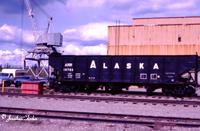 |
This
car displays the HT AAR mechanical designation in the lower right
hand corner above the right hand truck. Since this class of cars
were added to the roster some time after April 1975, it is assumed
they were purchased second hand by the Alaska Railroad. Fairbanks,
June 1983 |
|
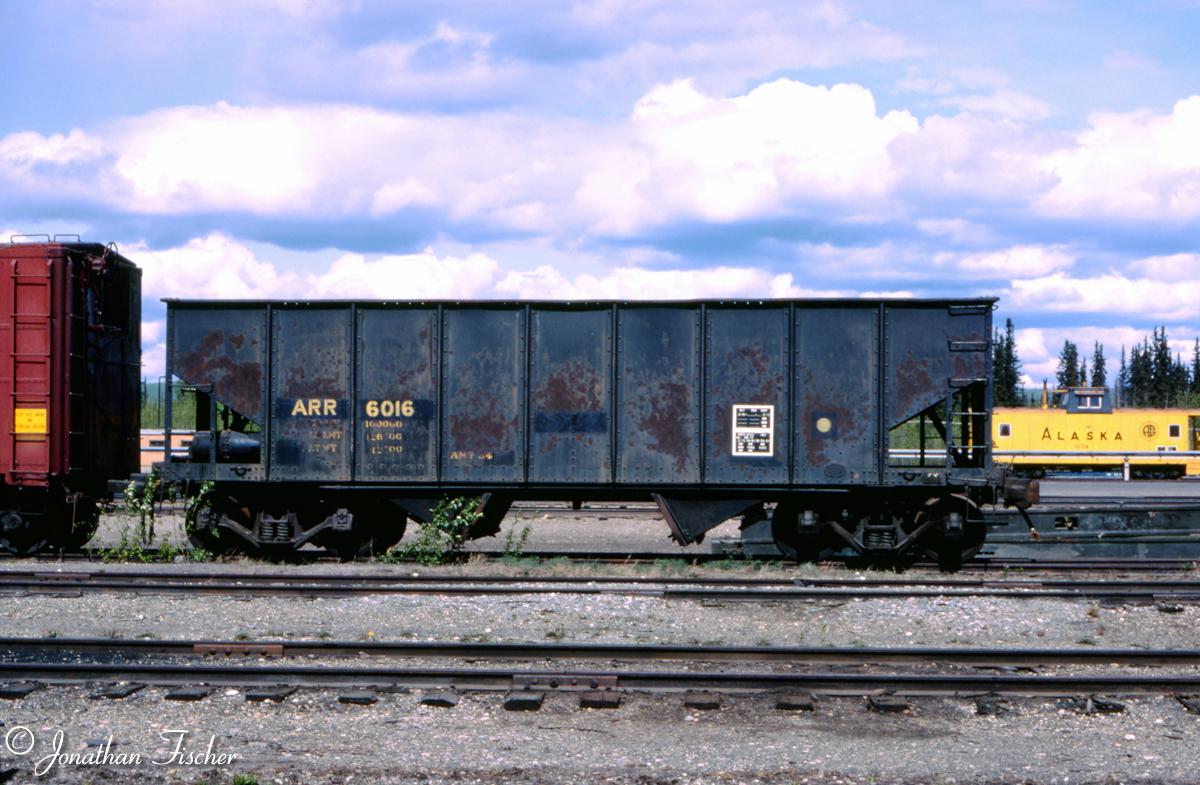
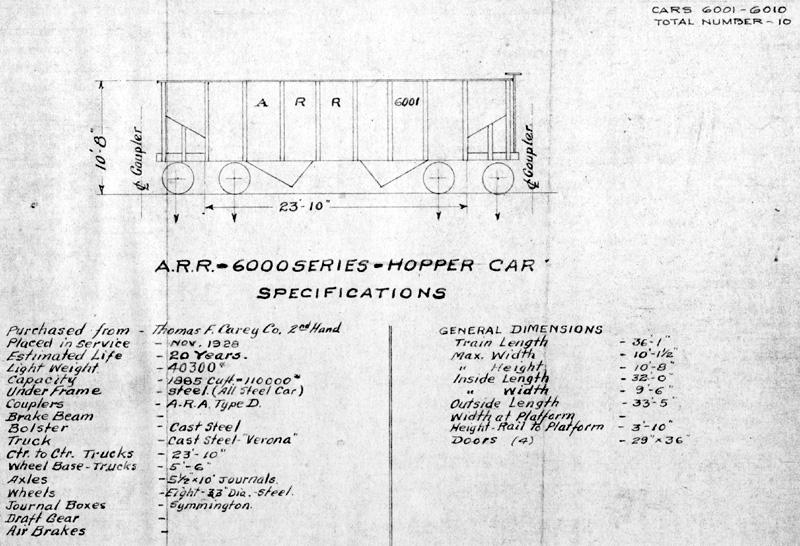
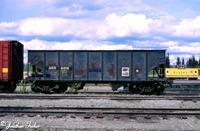
| The following
is per The Official Railway Equipment Register of October 1974.
The 6016 has an AAR mechanical designation of HM. An HM hopper is
an open top, self clearing car, having fixed sides and ends and
bottom consisting of two divided hoppers with doors hinged crosswise
of the car and dumping between the rails. The 6016 has an exterior
length of 33' 6". It can hold 1883 cubic feet, or 100,000 lbs.
whichever is less. As of October 1974 in was in a 19 car class from
6011 to 6030. Fairbanks, June of 1983. |
 |
|
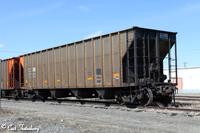 |
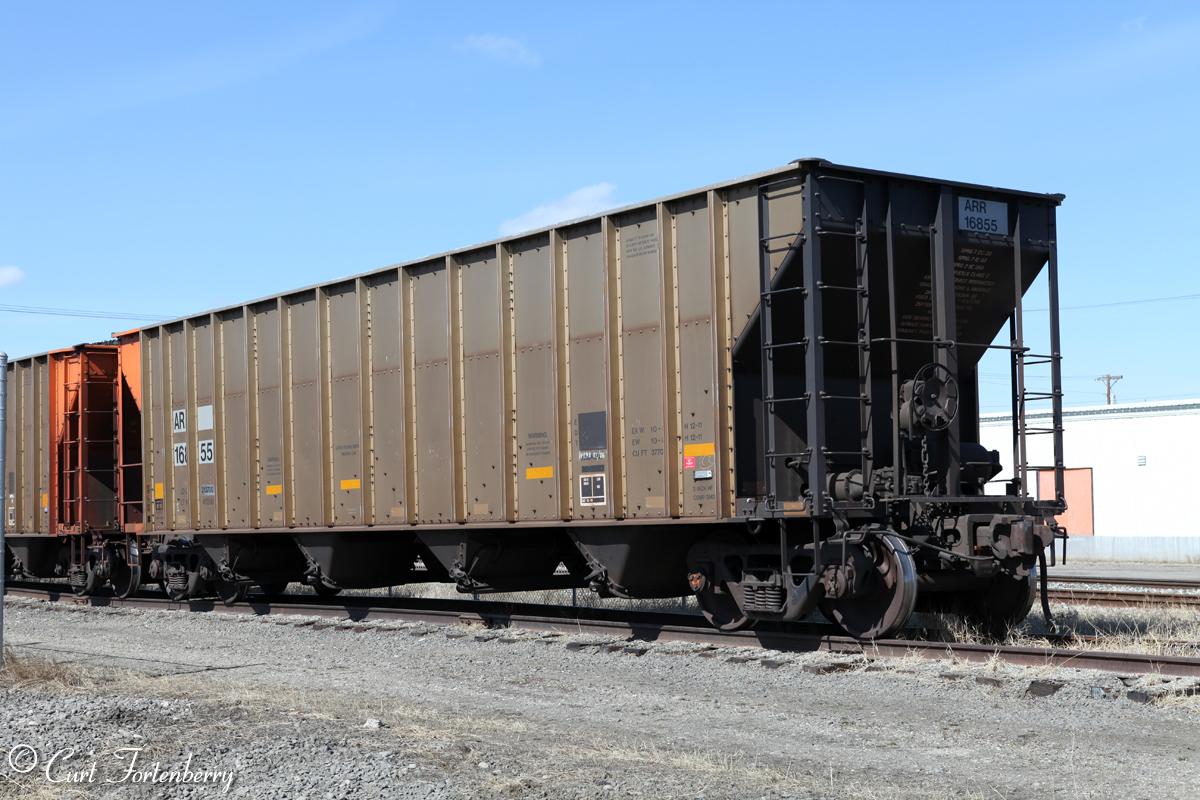
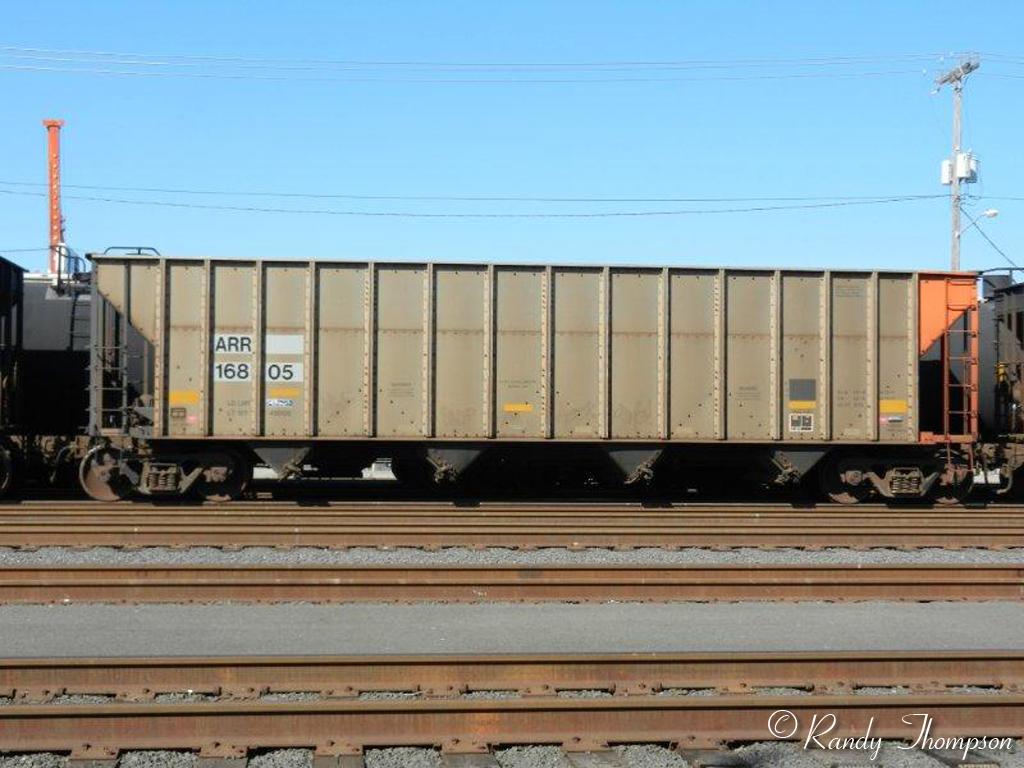
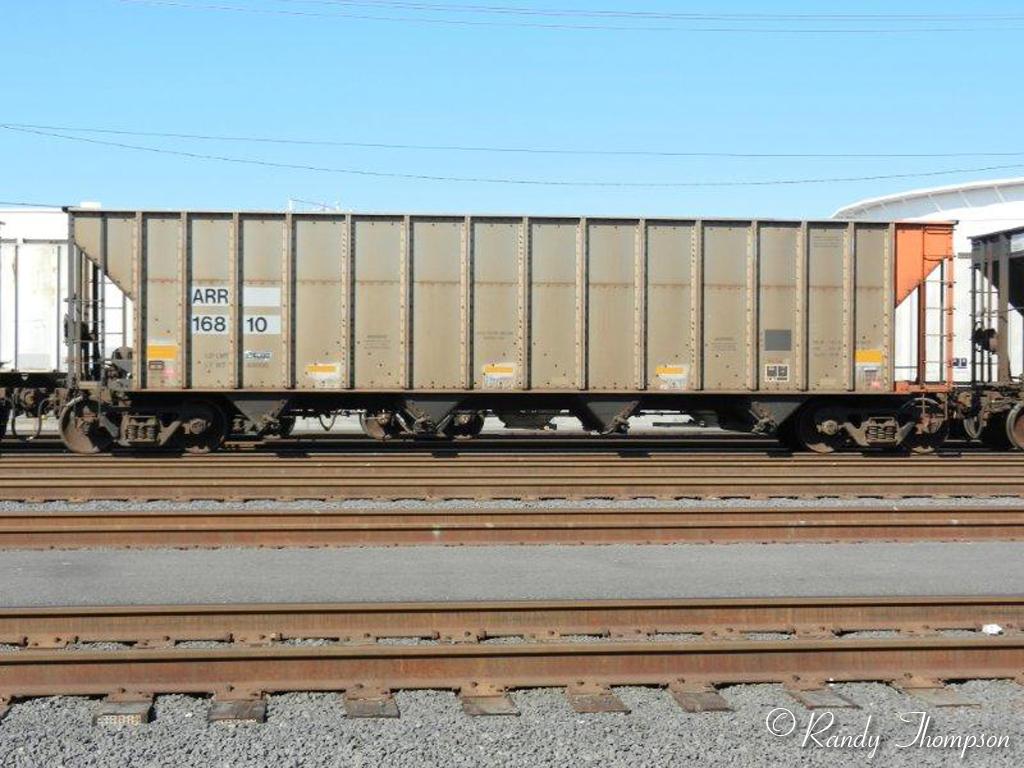
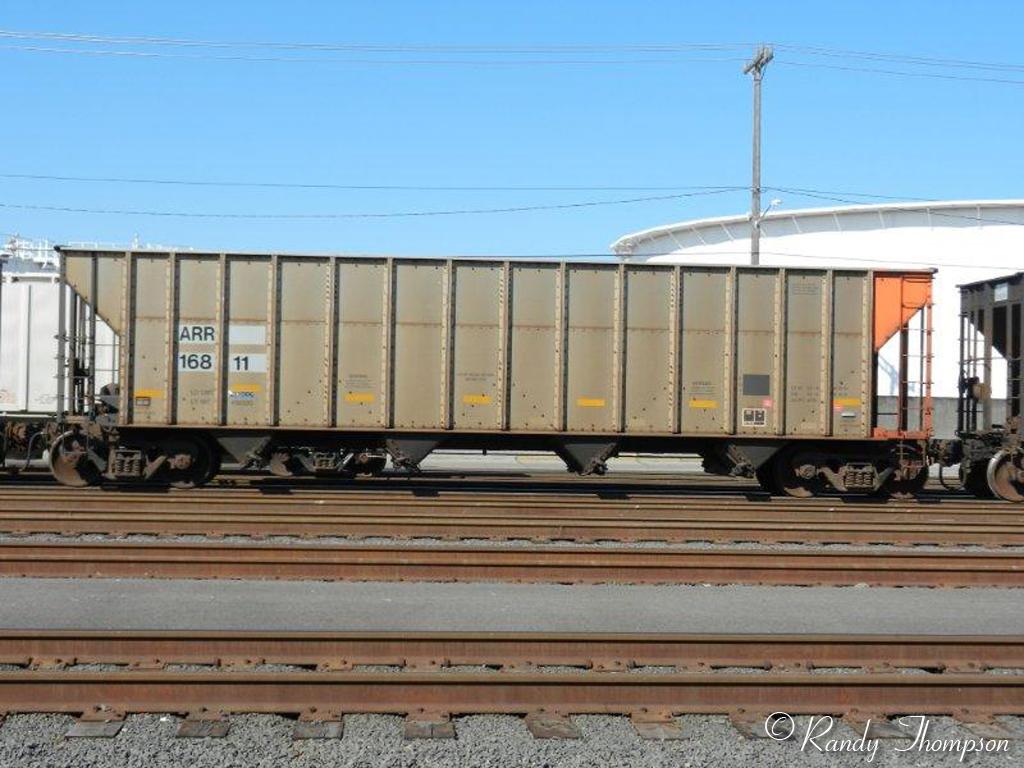
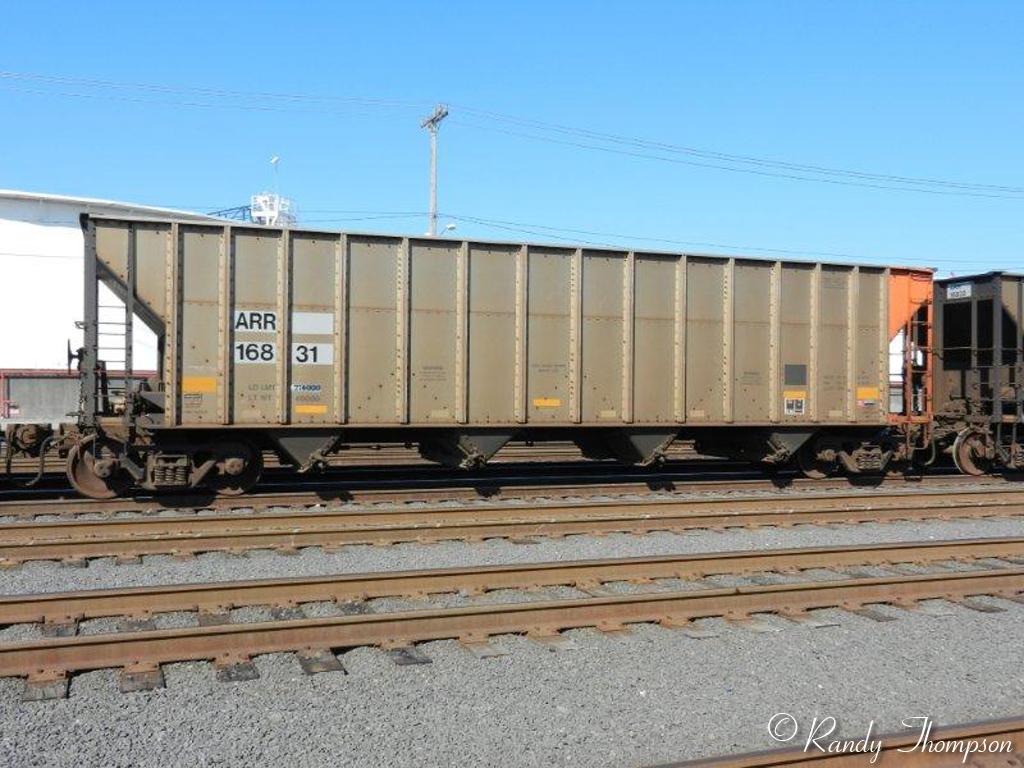
The
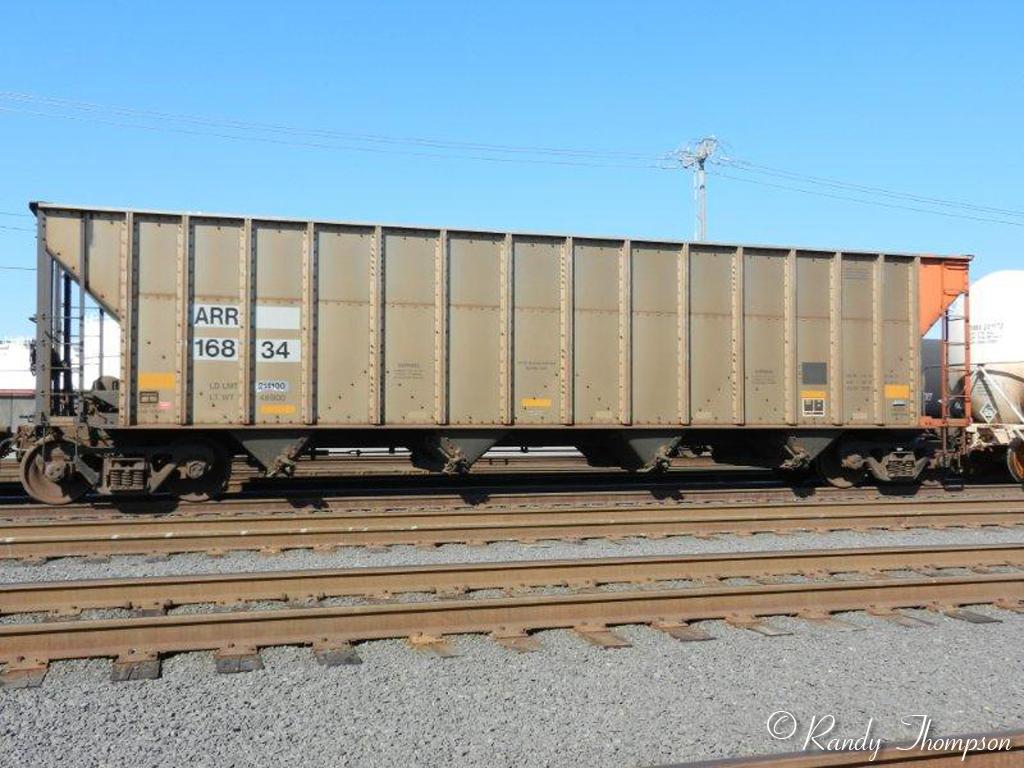
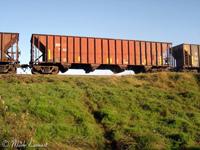
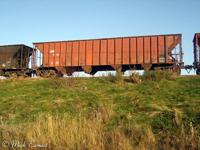
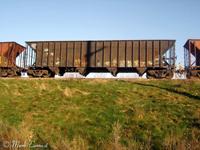
railroad's newest hoppers are series 16800-869 and were obviously
purchased used. (Update: All 70 units were sold August 2016)
8/19/16 About 7 pm, I watched a train coming in from the Eielson Branch to the Fairbanks yard. Empty coal train pulled by a single engine. 70 cars, +/-, one of the longest I've seen pulled off that branch (sometimes cars are stored on Ft. Wainwright, the assembled and pulled out in big trains). Completely uniform train--all newer appearing, presumably aluminum sided cars. I don't think I've seen a coal train on the Alaska Railroad with completely matched cars. - Eric Schneider, Fairbanks, Alaska
Those are the aluminum hoppers that were stored at Wainwright, 70 in all. They have been sold and will be headed outside in the near future. - Frank Keller
|
|
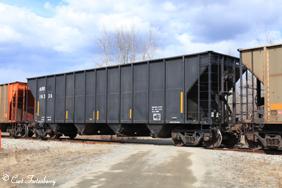
| Coal
hopper at MP12 between North Pole and Ft. Wainwright. 4/26/15 |
 |
|
 |
 |
 |
 |
 |
|
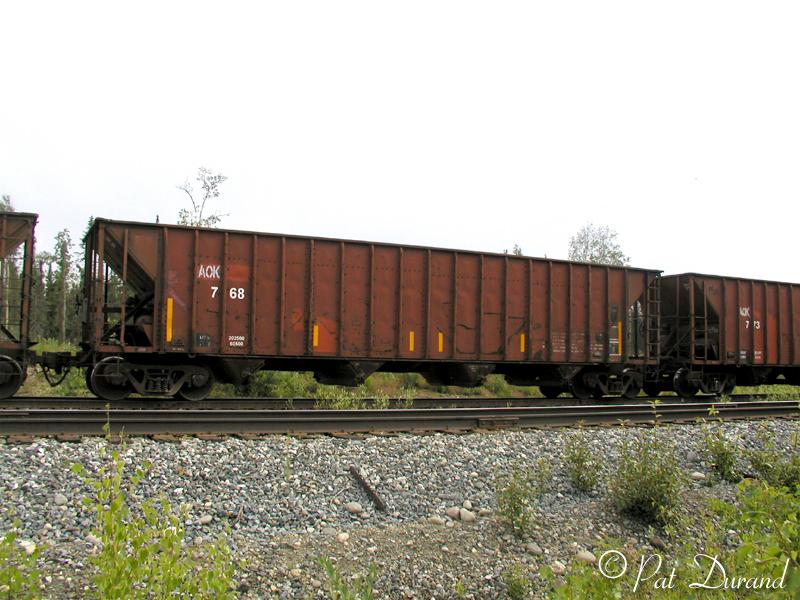
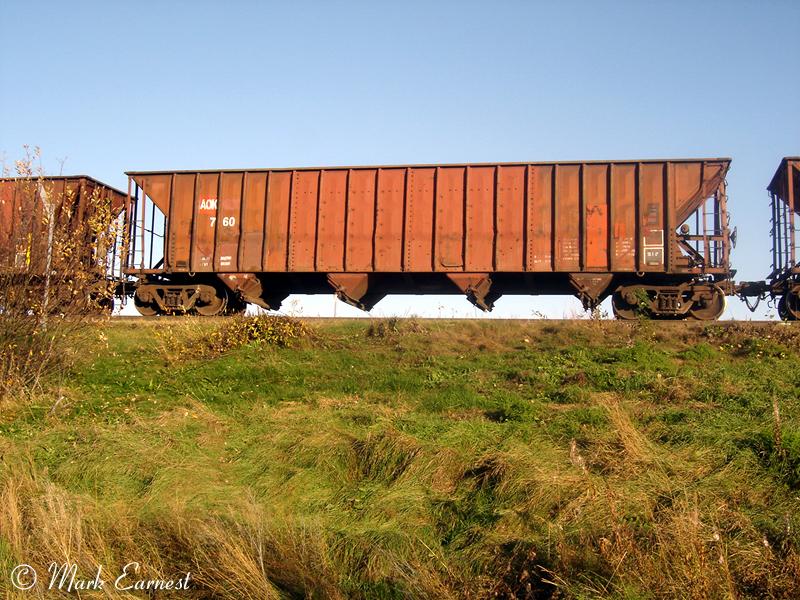
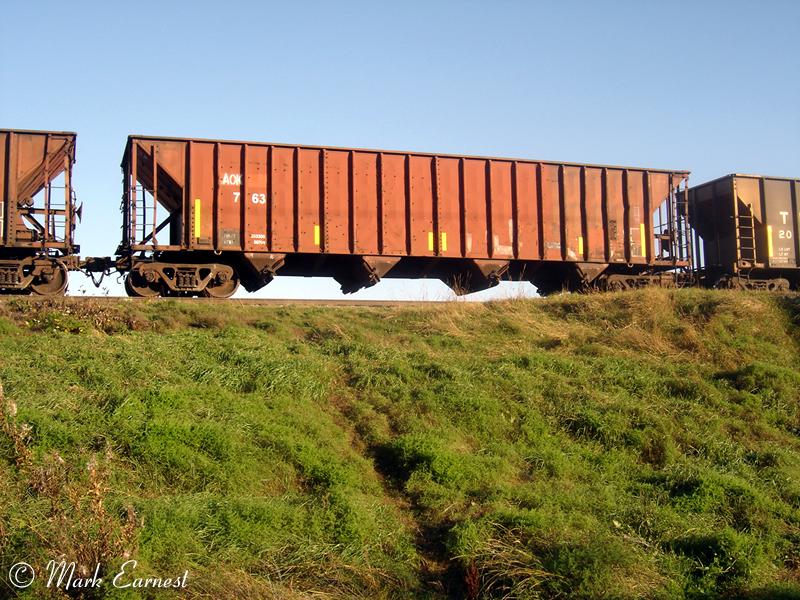
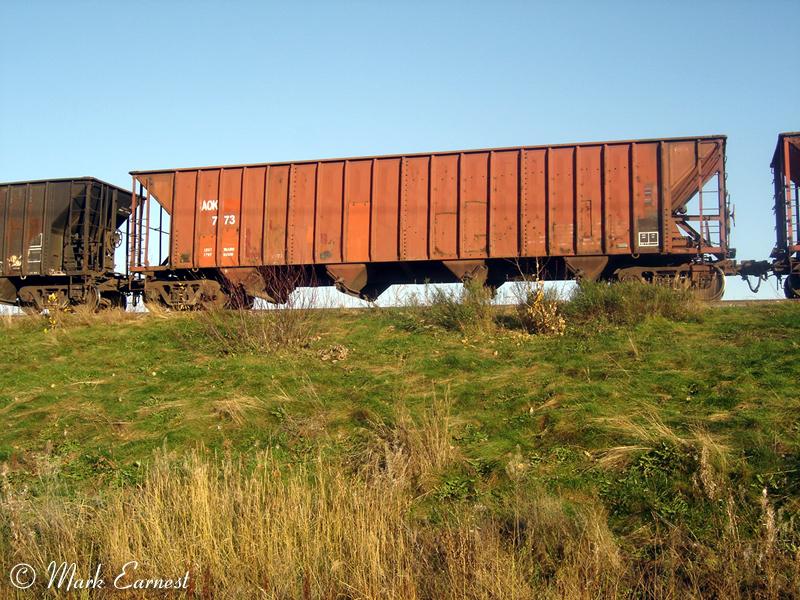
| [7/25/06] AOK hoppers being
used between the Pitman pit & Anchorage. Many of them were heavily
worn & had major patch jobs on the inside sheets. |
|
|
Added 8/26/11:
- 70 used hopper cars, builder Johnstown, year built 1999/2000, aluminum,
quad hopper bottom discharge, rotary, 3770 cubic foot capacity, all
due in Alaska by early October
Photos:
8/25/16 Update: These units were sold to the Strata Corporation in Montana on August 2016 due to the downturn in the coal market.
Also sold were the 20XXX units. Jonathan Fischer says of his photos, "Yesterday, Sunday, October 2, 2016 there were a number of TNM hoppers spotted on Harbor Island, in West Seattle. These hoppers had previously been in coal service on the ARR and were part of the group of cars unloaded from this week’s southbound barge."
|
|
Added 7/20/12: Casey Durand's photos from July 2012
|
|
See also
Engineering drawings:
|
Page created 2/15/99 and last updated 5/12/25 |